Table of Contents
- 01Start with How You'll Ride
- What's Your Typical Ride?
- How Hilly Is Your Route?
- Where Will You Store and Transport It?
- What Terrain Will You Ride?
- What's Your Real Budget?
- 02The Specs That Matter Most
- Battery Capacity (Watt-Hours)
- Motor Power and Torque
- E-Bike Class
- Weight and Frame Design
- Build Quality and Components
- 03The Specs That Matter Less Than You Think
- Claimed Range
- Peak Wattage
- Top Speed
- 04Where and How to Buy
- Direct-to-Consumer Brands
- Local Bike Shops
- Big-Box Retailers
- What to Check Before You Pay
- 05Making Your Decision
- 06FAQ
Choosing an electric bike comes down to matching the machine to the riding you'll do most: your typical distance, the hills you'll climb, where you'll store it, and what you can spend. The specs that matter most are motor torque, battery capacity in watt-hours, total weight, and e-bike class, not the headline numbers like top speed or claimed range that dominate the marketing.
Most first-time buyers make the mistake of shopping by price or looks first, then discovering too late that the bike is too heavy to carry upstairs, too slow for their commute, or illegal on the paths they planned to ride. This guide walks through the questions to ask yourself before you shop, the specs that predict real-world performance, and the ones that matter far less than you'd think.
Start with How You'll Ride
Before you look at a single spec sheet, answer these five questions. Your answers will narrow the field faster than any feature list.
What's Your Typical Ride?
Are you commuting eight miles each way on paved bike lanes, running errands within a three-mile radius, or exploring gravel trails on weekends? A daily 16-mile commute needs more battery capacity and a higher e-bike class for speed than a two-mile grocery run. If you're carrying kids or cargo, you need a frame built for load bearing, like the Rad Power Bikes RadWagon, which is purpose-built for heavy hauling with 750W of motor power.
Write down your most common trip: the distance, the route type (bike lane, sidewalk, trail, road), and whether you'll carry anything beyond a backpack.
How Hilly Is Your Route?
Motor torque, measured in newton-meters (Nm), is what pushes you up a hill. Wattage tells you the motor's total output, but torque tells you how much rotational force it applies at low speeds when you're climbing. A 500W motor with high torque will outclimb a 750W motor with low torque on a steep grade.
If your route includes sustained climbs or you weigh more than 200 pounds, look for motors rated at 750W or higher and check user reviews for hill performance. Mid drive motors (mounted at the pedals) deliver better climbing leverage than hub motors (in the wheel), but they cost more and require more maintenance.
Where Will You Store and Transport It?
An electric bike weighs anywhere from 50 to 90 pounds, roughly double a traditional bike. If you live on the third floor with no elevator, a 77-pound bike can be a daily burden. If you need to lift it onto a car rack or carry it down basement stairs, weight becomes the deciding factor.
Step-through frames are easier to mount and dismount, especially with a load or in stop-and-go traffic. High-step frames (traditional diamond frames) are stiffer and better for aggressive riding, but harder to swing a leg over when you're tired or layered in winter clothes.
Measure your storage space: doorway width, ceiling height in your garage or shed, and whether you can roll the bike in or need to lift it over a threshold. Folding e-bikes exist but sacrifice ride quality and durability.
What Terrain Will You Ride?
Pavement, packed gravel, or loose trail? Tire width and tread, suspension, and frame geometry all follow from this answer.
For pavement and smooth bike paths, you want narrow tires (1.5 to 2.5 inches), no suspension, and an upright or forward-leaning riding position for efficiency. For gravel and light trail, go with 2.5 to 3-inch tires with some tread and consider front suspension. For loose dirt, rocks, and roots, you need fat tires (4+ inches), full suspension, and a mountain geometry frame like the Kingbull Rover 2.0 or Rad Power Bikes Radster Trail.
Most riders overestimate the terrain they'll tackle. If 90% of your riding is paved commuting with the occasional gravel path, buy for the pavement, not the fantasy weekend ride.
What's Your Real Budget?
Entry-level e-bikes with reliable components start around $1,200. Below that, you'll find underspecced batteries, low-torque motors, and poor build quality that costs more to fix than the bike is worth. Quality mid-range bikes run $1,400 to $2,500. Premium models with advanced features, mid drive motors, and name-brand components go $3,000 and up.
Budget for accessories too: a good lock ($80 to $150), helmet ($50+), lights if not included ($40+), fenders ($30+), and a rear rack or panniers if you're carrying cargo ($60+). Plan on spending 15 to 20% of the bike's price on the gear you need to ride safely and practically.
The Specs That Matter Most
These are the numbers that predict how the bike will perform in the real conditions you'll ride.
Battery Capacity (Watt-Hours)
Battery capacity is measured in watt-hours (Wh), which tells you how much energy the battery stores. More watt-hours means more range, all else being equal. A 500Wh battery is entry-level. A 700Wh battery is mid-range and will handle most commutes comfortably. An 800Wh or larger battery is for long rides, heavy cargo, or hilly terrain.
But watt-hours alone don't tell you range. Range depends on your weight, the cargo you carry, how much pedal assist you use, the terrain, wind, temperature, and tire pressure. A bike with a 720 Wh battery like the RadWagon might claim 60 mi of range, but if you're hauling kids up hills in high assist, expect closer to 30 miles.
A good rule of thumb: divide the claimed range by 1.5 to estimate real-world range in mixed conditions with moderate assist. If the bike claims 60 miles, plan for 40.
Motor Power and Torque
Motor power is listed in watts (W). In the U.S., Class 1 and 2 e-bikes are legally limited to 750W nominal (continuous) power, though peak power can be higher. More watts generally means more acceleration and better performance under load, but torque is the better predictor for hills.
Hub motors (rear or front wheel) are simpler, cheaper, and require less maintenance. They're fine for flat to moderate terrain. Mid drive motors (at the cranks) use the bike's gears for mechanical advantage, so they climb better and feel more like riding a traditional bike, but they wear the chain and cassette faster and cost more to repair.
If the spec sheet doesn't list torque in Nm, look for user reviews that mention hill climbing with a rider of your approximate weight. Torque figures between 40 and 60 Nm are entry level. 60 to 80 Nm is strong. Above 80 Nm is high performance.
E-Bike Class
E-bike class is a legal category that determines where you can ride and how fast the motor can assist. The rules vary by state and local jurisdiction, but the federal framework is:
- Class 1: Pedal assist only (no throttle), motor cuts off at 20 mph. Legal on most bike paths and trails.
- Class 2: Throttle allowed, motor cuts off at 20 mph. Legal on streets and many paths, but banned from some trails.
- Class 3: Pedal assist only, motor cuts off at 28 mph. Legal on streets and some bike lanes, often banned from multi-use paths and trails. May require a license or helmet depending on the state.
If you plan to ride on shared-use paths or trails, stick with Class 1. If your commute is on streets and you want to keep up with traffic, Class 3 gives you 28 mph assisted speed, like the Lectric XPeak2, which supports Class 1,2,3. If you want the flexibility of a throttle for starting from a stop, Class 2 is the compromise.
Some bikes can switch classes via a settings menu, giving you adaptability as regulations change or you ride different routes. Check your local rules before you buy: New York City has different class restrictions than Portland, and trail access varies county by county.
Weight and Frame Design
Total bike weight ranges from about 50 pounds for a lightweight commuter to over 80 pounds for a cargo or full-suspension mountain bike. Every extra 10 pounds makes the bike harder to lift, harder to pedal without assist, and slower to handle.
If you'll ever ride without power (battery dead, forgotten charger), lighter is better. If you need to lift the bike regularly, 60 pounds is the practical upper limit for most people. The Lectric XPeak2 sits at 64.5 lbs, which is manageable for occasional lifting but heavy for daily stairs.
Frame material matters less than geometry. Aluminum is the standard: light, affordable, and stiff. Steel is heavier but more comfortable and easier to repair. Carbon fiber is lightest and stiffest but expensive and fragile in a crash.
Step-through frames are easier to mount, better for skirts or dresses, and safer in stop-and-go traffic. High-step frames are stiffer and better for high-speed or off-road riding. If you're over 5'10" or under 5'4", check the size chart carefully: many e-bikes come in one size claimed to fit 5'4" to 6'2", which means they fit no one perfectly.
Build Quality and Components
The motor and battery get the headlines, but the parts that touch the ground and your body determine whether the bike is pleasant or punishing to ride.
Brakes: Hydraulic disc brakes are the standard for e-bikes because the extra weight and speed demand strong, consistent stopping power. Mechanical disc brakes work but require more hand force and frequent adjustment. Rim brakes are obsolete on e-bikes and unsafe in wet conditions.
Tires: Wider tires (2.5+ inches) absorb bumps and provide grip but slow you down on pavement. Narrower tires (1.5 to 2 inches) are faster but harsher. Puncture-resistant tires or built-in flat protection save you the hassle of roadside repairs.
Gears: A 7- or 8-speed drivetrain is adequate for flat terrain. If you have hills, look for 9 or 10 speeds or an internally geared hub, which is lower maintenance. Single-speed e-bikes exist but are only practical on flat routes with strong motor assist.
Display and controls: A clean, readable display shows your speed, battery level, assist level, and trip distance. Backlit displays are easier to read in bright sun. Controls should be within thumb reach and intuitive: you shouldn't have to look down to change assist levels.
The Specs That Matter Less Than You Think
Beginner buyers fixate on these numbers, but they rarely predict satisfaction.
Claimed Range
Every e-bike lists a maximum range: "up to 60 miles" or "90 miles per charge." These numbers come from tests in ideal conditions, light rider, flat terrain, low assist, no wind, optimal temperature, which almost never match real use.
Range depends on so many variables (rider weight, cargo, hills, wind, temperature, tire pressure, assist level, how much you pedal) that the manufacturer's number is nearly meaningless. A bike claiming 90 mi like the Aventon Ramblas might give you 50 miles in hilly terrain with high assist, or 100+ if you're light and pedaling hard on flat ground.
Instead of trusting the range claim, look at battery capacity in watt-hours and divide the claimed range by 1.5 for a conservative real-world estimate. Then figure out if that covers your typical ride with margin for cold weather and battery aging.
Peak Wattage
Motor specs sometimes list peak power (the short burst maximum) instead of nominal or continuous power (what the motor sustains). A motor rated "1200W peak, 500W nominal" is legally and practically a 500W motor. Peak wattage helps you accelerate from a stop or sprint up a short, steep hill, but it doesn't improve sustained climbing or cruising performance, and the motor can only hold peak power for seconds before it overheats.
Focus on nominal wattage and torque for a better sense of everyday performance.
Top Speed
E-bikes are legally limited by class: 20 mph for Class 1 and 2, 28 mph for Class 3. The motor cuts assist at that speed, so a bike claiming 28 mph is just telling you it's a Class 3 bike.
In practice, you'll rarely sustain 28 mph for long. It takes significant battery power, and it's tiring and dangerous in mixed traffic or on bike paths. Most riders cruise at 15 to 20 mph because it's comfortable, efficient, and safe. Top speed is a legal category, not a performance advantage.
Where and How to Buy
E-bikes are sold through three main channels, each with trade-offs.
Direct-to-Consumer Brands
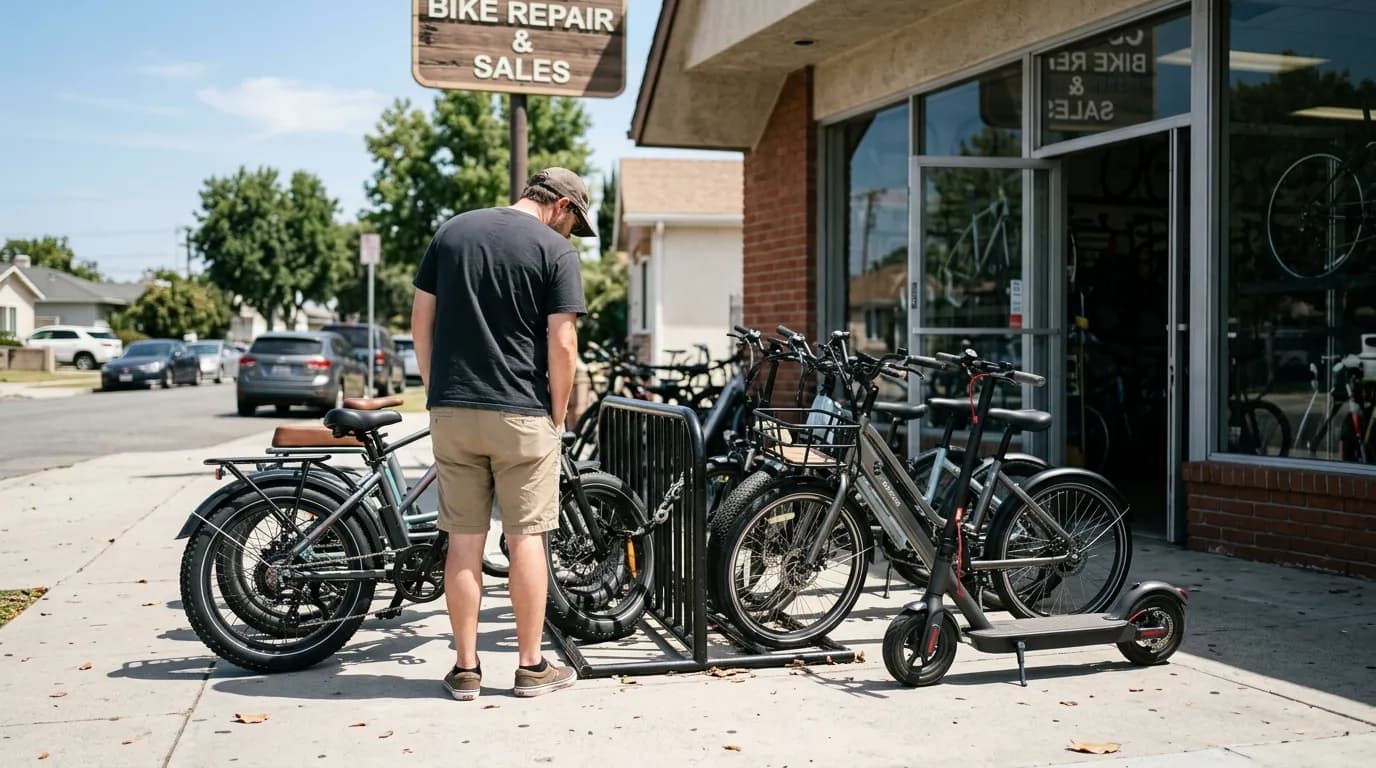
Brands like Rad Power Bikes, Lectric, and Aventon sell online and ship to your door, usually 90% assembled. You tighten the handlebars, attach the pedals, and inflate the tires. Prices are lower because there's no dealer markup, and return policies are usually generous (14 to 30 days).
The downside: you can't test ride before buying, and if something breaks, you're troubleshooting over email or video chat and waiting for parts. If you're comfortable with basic bike maintenance (adjusting brakes, truing a wheel), this is the best value. If you've never worked on a bike, consider whether saving $300 is worth the hassle of fixing it yourself.
Local Bike Shops
Independent bike shops sell name-brand e-bikes like Trek, Specialized, Cannondale, and Riese & Müller. You can test ride, get expert fit advice, and bring the bike back for service. Shops also assemble and tune the bike before you take it home, so it rides correctly from day one.
Prices are higher (often 20 to 40% more than direct-to-consumer bikes with similar specs), but you're paying for expertise, service, and accountability. If something breaks, you have a person to talk to, not a ticket system. If you're new to bikes or want long-term support, a shop is worth the premium.
Big-Box Retailers
Stores like Dick's Sporting Goods, REI, and Costco carry a few e-bike models, usually budget to mid-range. Assembly quality is inconsistent, staff knowledge is hit or miss, and long-term service is limited. The advantage is you can see the bike in person and sometimes get a deal.
Buy from big-box stores only if you know exactly what you want and can inspect the assembly yourself. Check that the brakes are adjusted, wheels are true, and all bolts are properly torqued. Don't assume the bike is ready to ride safely.
What to Check Before You Pay
Whether you buy online or in person, confirm these details before checkout:
- Warranty: Look for at least two years on the motor and battery, one year on the frame and components. Read the fine print on what voids the warranty (water damage, off-road use, modifications).
- Replacement parts: Can you buy a replacement battery, charger, or display if something breaks? Some brands discontinue parts within two years, leaving you with a 200-pound paperweight.
- Local service: If you buy direct-to-consumer, find out which local shops will service bikes they didn't sell. Many won't, especially for uncommon brands.
- Return policy: Make sure you have at least 14 days to ride the bike and return it if it doesn't fit or meet your needs. Some brands charge a restocking fee; others cover return shipping.
Check online reviews for the specific model, not just the brand. Look for comments about battery longevity, customer service responsiveness, and common failures. A brand with great marketing and bad service will cost you time and money.
Making Your Decision
Choosing an electric bike is less about finding the perfect machine and more about understanding the trade-offs. A light, nimble commuter won't haul cargo. A powerful cargo bike won't fit in a small apartment. A Class 3 speed demon won't be legal on your favorite trail. No single bike does everything well, so buy for the 80% use case, not the 5% edge case.
Start with your typical ride: the distance, the hills, the storage situation. Match the battery size to your range needs with a cushion for winter and aging. Choose a motor and class that fits your terrain and local laws. Pick a weight you can lift when you need to. Test ride if you can, or buy from a brand with a solid return policy if you can't.
The best electric bike is the one you'll ride often, not the one with the most impressive spec sheet. Keep it simple, buy quality components, and you'll spend more time riding and less time in the garage.
Explore our full electric bike comparison tool to see specs side by side, or browse by category to find models that match your riding style.
Frequently Asked Questions
What is the best electric bike for beginners?
How much should I spend on an electric bike?
What is the difference between Class 1, 2, and 3 e-bikes?
How far can an electric bike go on a single charge?
Do I need a license to ride an electric bike?
How long does an e-bike battery last?
Now See What We Picked
You know what to look for. These are the models that hold up against it.
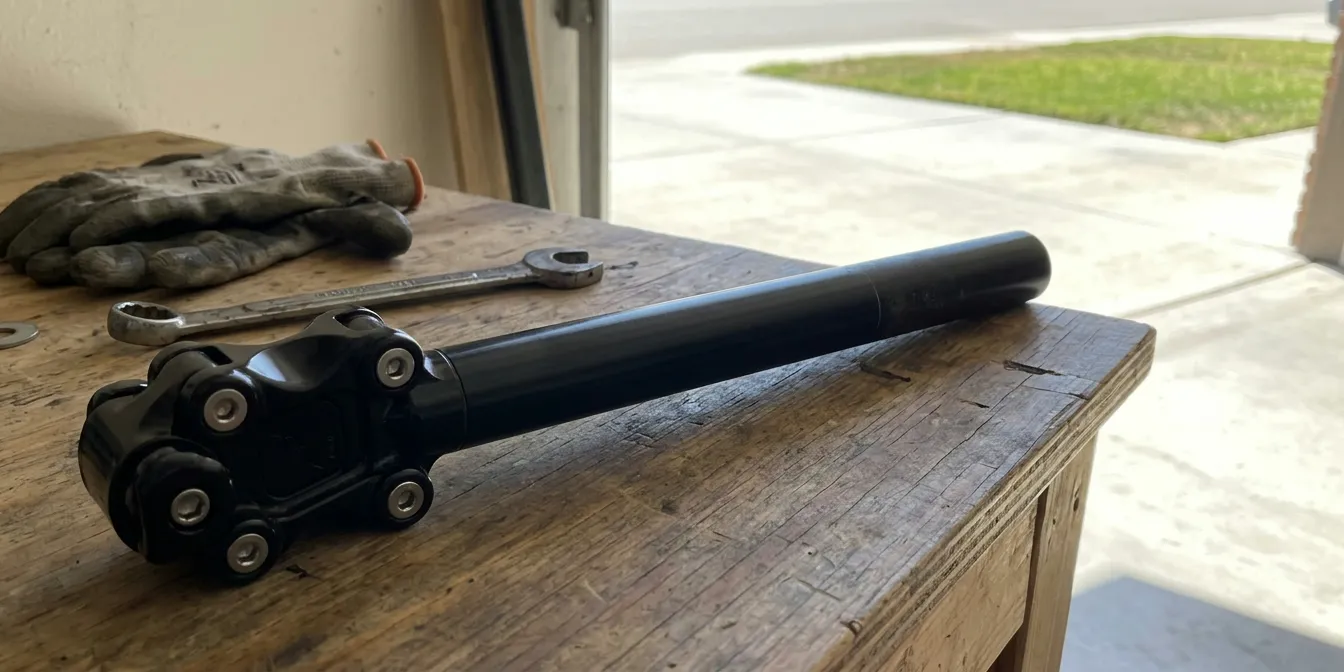 The Best Suspension Seatposts for E-BikesMost e-bikes have no rear suspension, so every pothole goes up the seatpost. These are the linkage posts reviewers and owners rate highest, with the rider limits and measurements to check first.
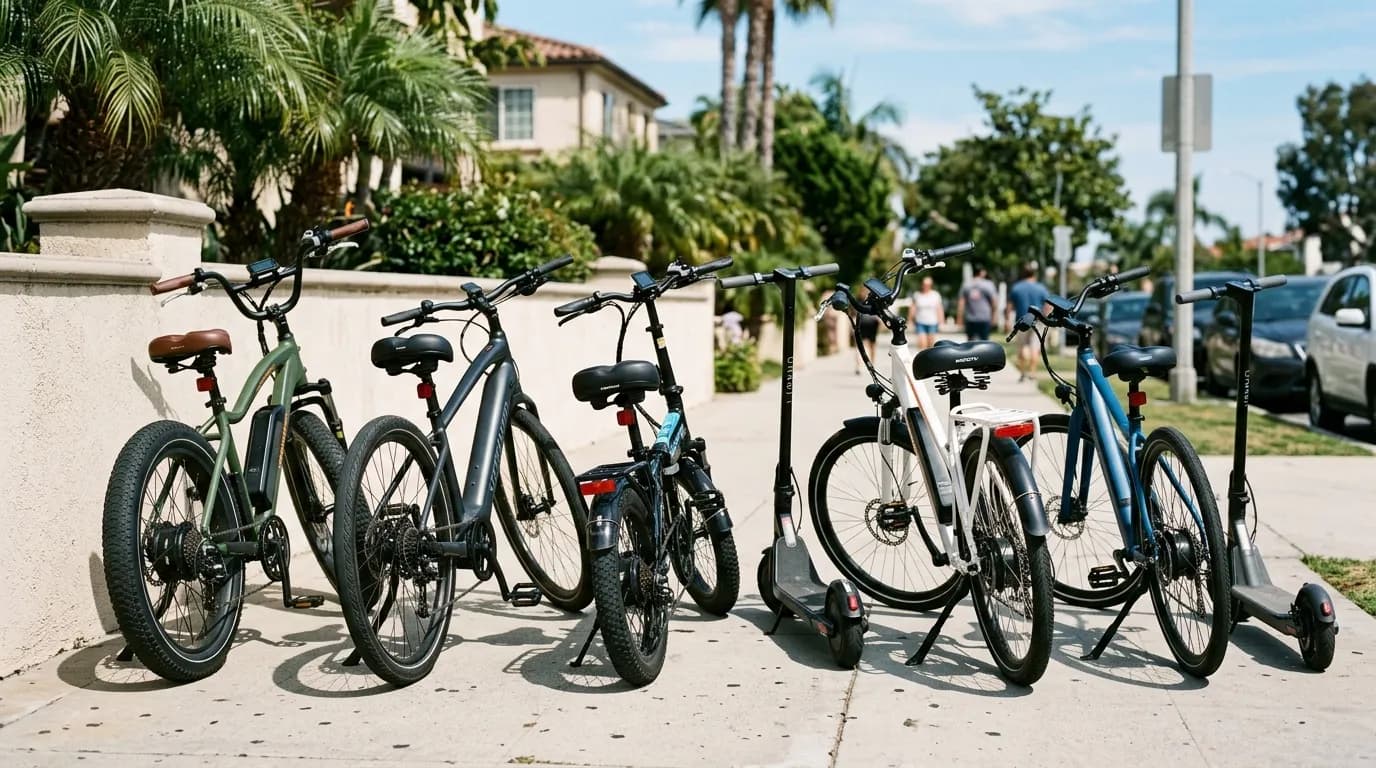 The Best Comfort Saddles for E-BikesE-bike riders sit upright and stay seated, so the saddle takes the whole ride. These are the comfort saddles reviewers and owners rate highest, sorted by how upright you sit.
 The Best E-Bike Bags and Panniers of 2026Nine panniers, trunk bags, baskets and front bags for electric bikes, chosen from review consensus, maker specs and Amazon ratings, with the rack-fit checks most guides skip.
Looking to buy an electric ride?
We track 378 vehicles and check their prices every day. Start wherever suits you.
Type
Budget