
Table of Contents
Most first-EUC guides rank wheels by top speed and range. Both matter eventually. Neither decides whether you enjoy the first month, and the first month is where people quit.
These are the factors that actually shape the beginning, drawn from what new riders struggle with once the box is open.
Weight, and what it costs you
Weight is the single biggest lever on how hard a wheel is to learn.
A heavy wheel cannot be corrected with your legs. When it starts to go somewhere you did not intend, a light wheel can be physically moved back; a heavy one has to be persuaded, and it takes its own time. Riders who start on very heavy wheels describe weeks spent covering the first few feet, and it is easy to read that as personal failure rather than physics.
Weight also decides everything you do off the wheel. You will carry it up steps, lift it into a car boot, and pick it up after drops. A 40 lb wheel is a bag. A 90 lb wheel is a two handed job you plan around.
What weight buys is real: bigger batteries, more motor, suspension, and stability at speed. That is a genuine trade, but it is a trade against your own learning curve, and range matters very little while you are still riding in a car park.
Rough bands, and they shift as models change:
- Under 50 lbs easiest to learn on, easiest to carry, modest range and speed
- 50 to 70 lbs the common first wheel compromise, enough performance to keep for a year or more
- Over 80 lbs faster, longer range, usually suspended, and a genuinely harder first month
Safety margin is a spec, and it is not on the box
An EUC keeps you upright by actively driving the wheel. If it runs out of headroom, it stops holding you up. That is a different failure from a scooter running low on power, and it is the reason this section exists.
Headroom shrinks when demand rises: speed, hills, rider weight, cold, hard acceleration, and low battery. Those stack. Each on its own is fine; three together on a nearly empty pack is how riders get hurt.
Wheels warn before they run out, through beeps, tilt back where the pedals tip up to force you to slow, and app alarms. Those warnings are the machine telling you it is near its limit, not a suggestion, and on most wheels the thresholds are configurable, which means it is possible to configure away your own safety net.
Practically, this means buying more wheel than your cruising speed needs. A wheel comfortable at 25 mph, ridden at 15, has margin. A wheel that tops out near your cruising speed has none, and margin is what absorbs the hill you did not plan for. A rule many riders use: your normal cruising speed should be no more than about two thirds of the wheel's rated top speed.
Worth knowing: most EUCs have no redundancy in the balance system. A single failed component means you go down, regardless of skill. A few makers have started building in partial redundancy, and it is a reasonable thing to ask about.
Battery, honestly
Two numbers get quoted and only one is useful.
Voltage (67 V, 84 V, 100 V and so on) tells you roughly how much power the wheel can deliver, since higher voltage systems generally support more power. Watt-hours (Wh) tell you how much energy it stores, and that is what becomes range.
Expect real range to be roughly 60 to 70% of the claimed figure, and less if you are heavy, fast, or riding hills. Claimed figures come from gentle, flat, slow test conditions.
For a first wheel, treat range as a floor rather than a target: enough that you are not planning every ride around it, which for most people is a genuine 15 to 20 miles. Beyond that you are buying weight.
There is a safety dimension too. On a self-balancing vehicle a low battery reduces the power available to keep you upright, not just the distance you can travel, so the last 20% is margin rather than range. That is covered properly in our battery charging guide.
Suspension is a commitment
Suspension transforms rough surfaces and adds complexity: more to adjust, more to maintain, more to get wrong. New owners regularly report being unable to work out how to set theirs up, and a badly set up suspension wheel rides worse than a good rigid one.
If most of your riding is on decent pavement, a solid non-suspension wheel removes an entire category of problems and is lighter for the same performance. If your roads are genuinely bad, suspension is worth it, but budget the time to learn spring rate and damping, or the money to have someone set it up.
Wheel size and pedal layout
Diameter is a real handling difference, not a spec sheet detail. Larger wheels, 18 to 20 inches, roll over bad pavement more easily and feel more planted at speed. Smaller wheels, 14 to 16 inches, turn more willingly and react faster, which makes them easier to learn on and more fun in tight spaces.
Pedal height sets your centre of gravity and your ground clearance in turns. Low pedals feel planted; high pedals let you lean further before a pedal scrapes. Many wheels now offer adjustable pedal height, which is genuinely useful.
Check what is in the box
Two things bite new owners repeatedly.
Power pads. Pads grip the wheel with your calves and make control markedly easier, particularly under acceleration and braking. Some wheels include them, some do not, and refurbished units frequently arrive without them. Aftermarket pads are not cheap and can carry long lead times, so factor them in when comparing prices rather than discovering them later.
Chargers and accessories. Confirm exactly what ships, especially on refurbished or grey market units. Turning up to a new wheel with no charger makes for a bad first week. If a fast charger is offered separately, it is a reasonable later purchase and a poor everyday default, since fast charging is harder on the pack.
The shell will get damaged
You will drop it. Every rider does, repeatedly, in the first weeks, and mostly at walking pace while learning to mount.
Shell materials vary and even riders of the same model disagree about how tough theirs is. Assume scuffs, and protect it from day one with foam, trim, or a purpose made cover. It costs almost nothing and preserves resale value on a machine you will very likely outgrow within a year.
Gear is not optional, and shin coverage is the part people miss
Wrist protection first, because catching yourself with your hands is involuntary and wrists are what break. A helmet always.
The commonly overlooked one is shins. The pedals are metal and sit at exactly shin height, and new riders catch them often enough that knee pads which stop above the shin are a repeated regret. Look for coverage that continues down the shin.
Budget gear as part of the wheel's price, not as an extra. A rider who is not afraid of falling commits properly to leans, and committing is the whole skill, so gear makes you learn faster as well as get hurt less.
Where to buy
Support matters more here than with most purchases, because EUCs need occasional parts and occasional advice.
A dealer who stocks spares, answers questions, and has a reputation to protect is worth a premium over the cheapest listing. Grey market and direct import units are usually cheaper and can be excellent value, but warranty support is slower and shipping a heavy wheel internationally for repair is not realistic.
Refurbished units are a reasonable way into the hobby if you confirm what is included, what the warranty covers, and what the battery's history is. A discounted price on a wheel with an unknown pack is not a discount.
What this means for a first wheel
A good first EUC is lighter than you think you want, faster than you plan to ride, simpler than the flagship, and bought with pads and protection budgeted rather than added later.
The wheel you learn on is rarely the wheel you keep, and that is fine: EUCs hold their value reasonably well, and the second one is a much better informed purchase. Optimise the first for learning.
Frequently Asked Questions
How much should I spend on my first electric unicycle?
Should I buy used for my first wheel?
Do I need suspension on a first EUC?
How fast do I actually need my first wheel to go?
Now See What We Picked
You know what to look for. These are the models that hold up against it.
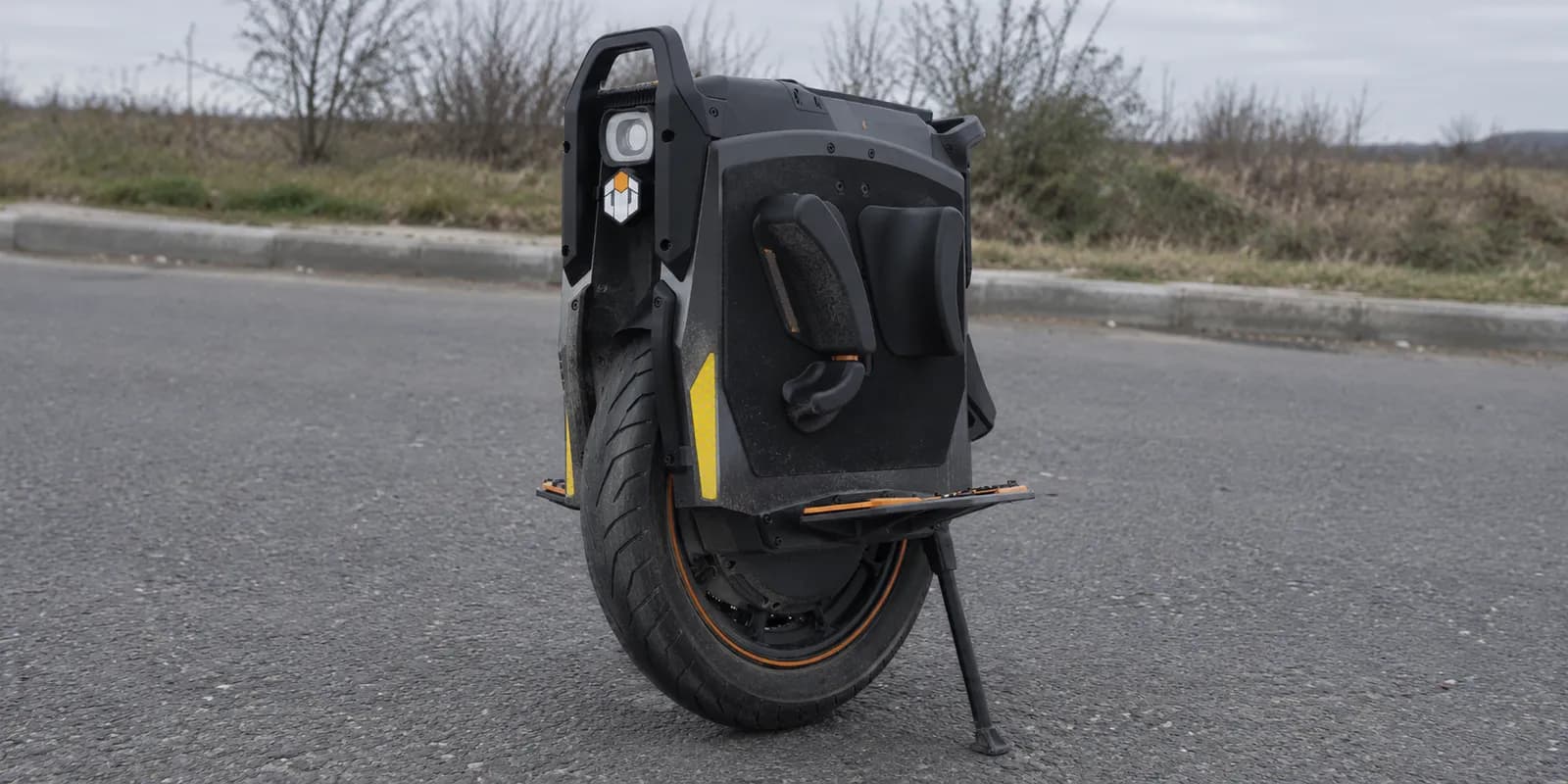 Fastest Electric Unicycles in 2026: Top Speed Models ComparedThe fastest electric unicycles in 2026 reach speeds from 43 to 93 mph, led by the InMotion P6 and KingSong F22 Pro for extreme performance riders.
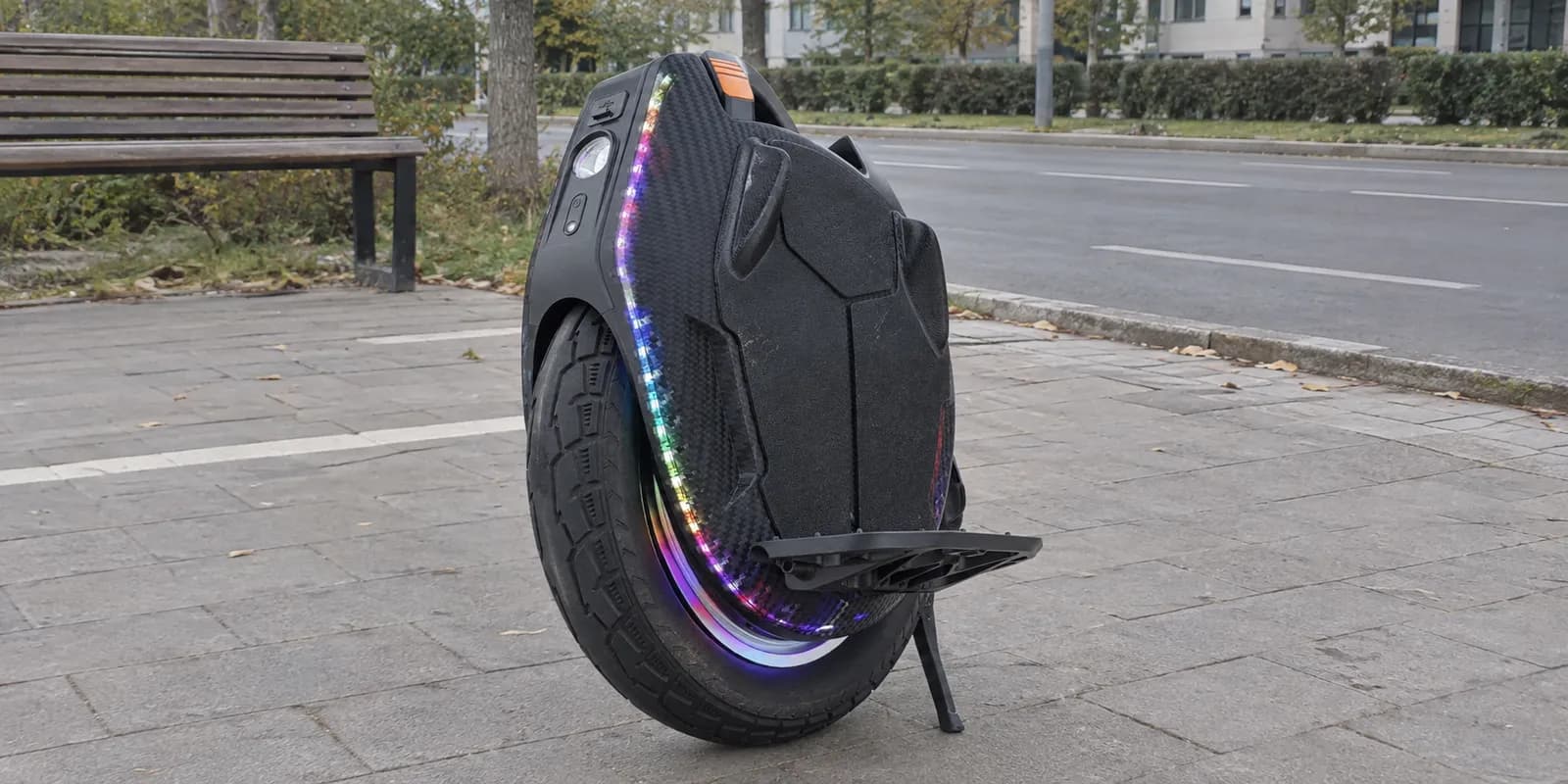 Best Electric Unicycles for Commuting in 2026The best electric unicycles for commuting balance range, portability, and speed. We break down top picks from budget friendly to long distance workhorses.
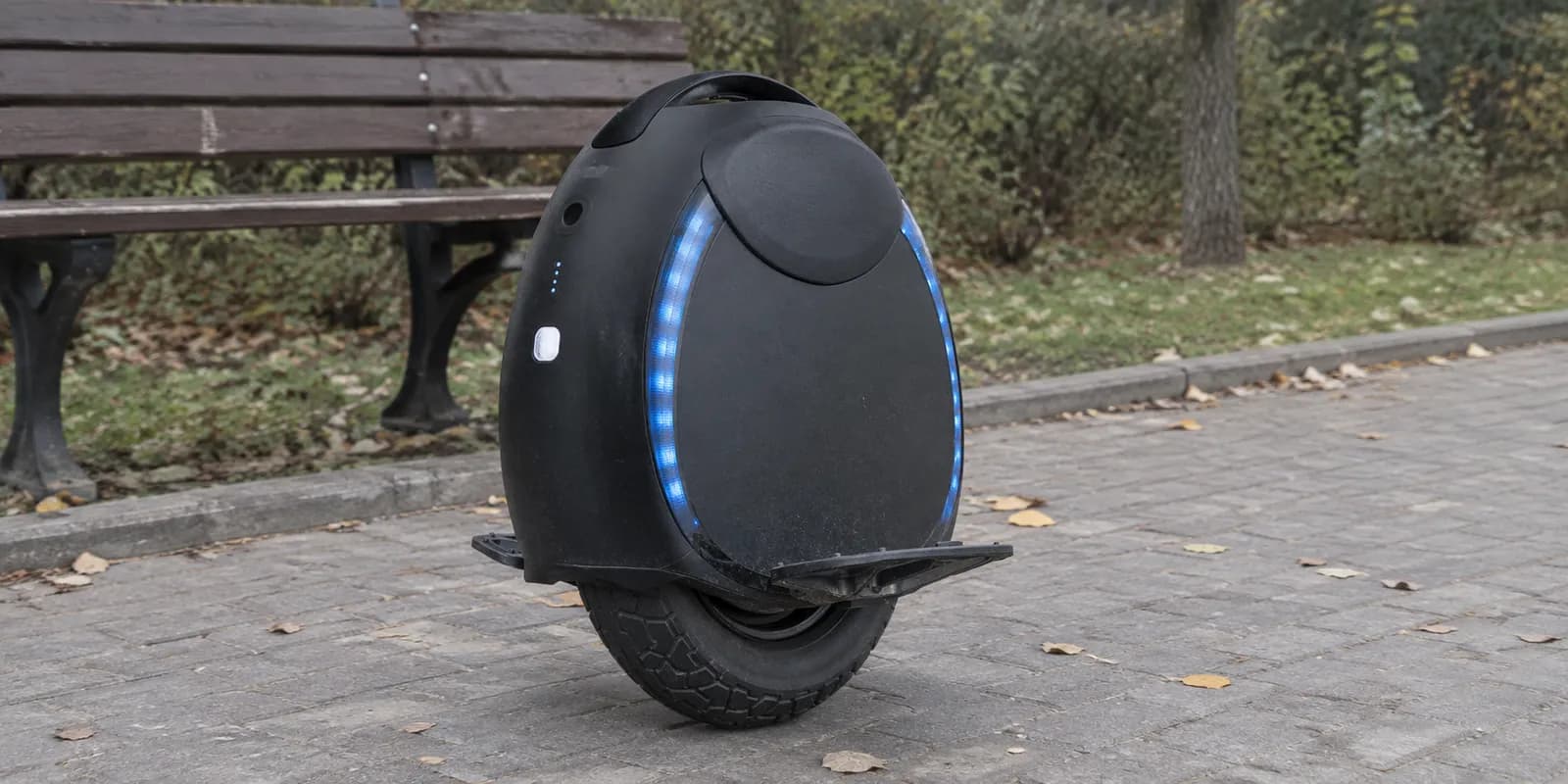 Best Budget Electric Unicycles in 2026: Top Affordable EUCs Under $1,000The best budget electric unicycles start around $450 for entry-level models like the InMotion V6, with solid mid-range options under $900 offering speeds up to 28 mph and 37-mile range.
Looking to buy an electric ride?
We track 378 vehicles and check their prices every day. Start wherever suits you.
Type
Budget