
Table of Contents
- 01What is actually inside the pack
- 02Why charge level changes how the vehicle feels
- 03Putting numbers to it
- 04What actually wears a battery out
- 05Why the top of the charge still earns its place
- 06Why self-balancing vehicles invert the advice
- 07Cold, heat, and the edge cases
- 08Storage
- 09A practical rule
- 10Short glossary
- 11The disagreement
- 12FAQ
Ask whether to charge to 100% and you will get two confident, contradictory answers from experienced riders. Both are defensible, because they are optimising for different things, and which one is right depends on what your vehicle does when the battery gets low.
The short version: on an ebike or scooter, charge to 80 to 90% for daily riding and save full charges for long rides. On a self-balancing vehicle like an electric unicycle, charge full before any serious ride, because there the last 20% is not range, it is safety margin. The rest of this explains why, because the reasoning generalises to situations this article does not cover.
What is actually inside the pack
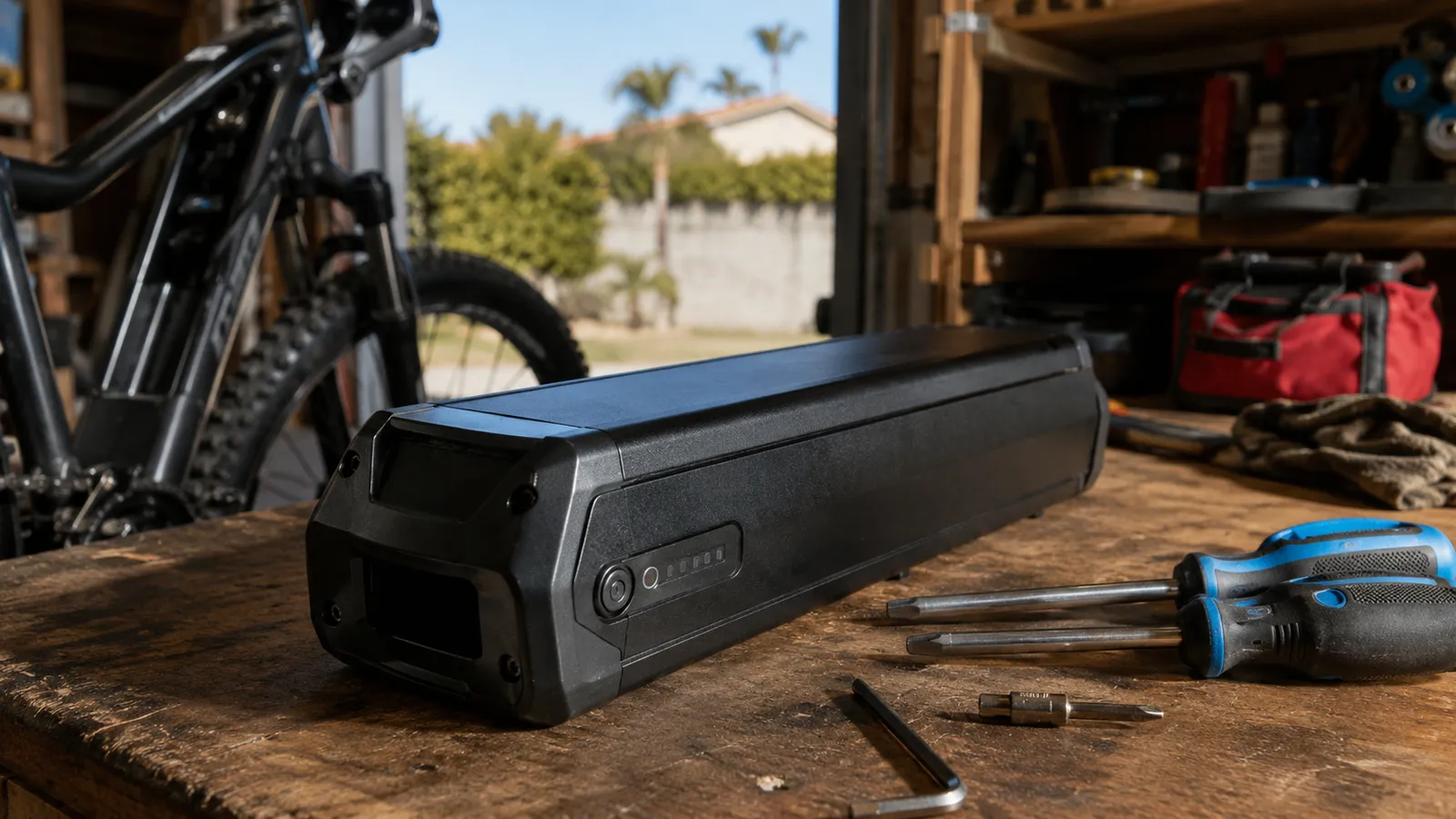
A PEV battery is not one battery. It is dozens of individual lithium-ion cells, usually cylindrical 18650 or 21700 cells, wired into a group.
Each cell holds about 3.6 to 3.7 volts nominal. Full is 4.2 V, empty is around 3.0 V. Since one cell cannot move a vehicle, cells are wired in series to raise voltage and in parallel to raise capacity. A pack described as 13S4P has 13 cells in series, four of those groups in parallel, and 52 cells total.
The series count sets the pack voltage. 13 cells in series gives a nominal 48 V pack, which reads 54.6 V at full charge and around 39 V empty. That is worth internalising: a "48 V" battery is only 48 V somewhere in the middle of its range. It spends its life sliding between roughly 39 and 54.6 V, and the vehicle's behaviour changes along the way.
Capacity is quoted two ways. Amp-hours (Ah) measure charge. Watt-hours (Wh) measure energy, and energy is what actually moves you.
Wh = volts x amp-hours.
A 48 V, 14 Ah pack holds 48 x 14 = 672 Wh. This is the only number worth comparing across vehicles, because a 60 V 10 Ah pack (600 Wh) holds less energy than a 48 V 14 Ah pack despite the bigger voltage number. Manufacturers know which figure flatters their product, so convert before you compare.
Why charge level changes how the vehicle feels
Two effects are at work, and confusing them is where most bad advice comes from.
The discharge curve is not a straight line. A lithium cell's voltage falls steeply for the first few percent, then flattens across most of the middle of its range, then falls off a cliff at the bottom. A pack sitting at 3.7 V per cell might be anywhere from 40% to 60% charged. This is why battery gauges on cheap vehicles are so erratic: they are usually reading voltage and guessing, and voltage barely moves through the middle. Gauges that track current in and out are far more accurate, and cost more.
Voltage sags under load. Every cell has internal resistance. Pull current through it and the voltage you actually get drops below the resting voltage, in proportion to how hard you are pulling. Accelerate hard or start a climb and a pack resting at 50 V might deliver 45 V while you do it, then spring back when you ease off.
Three things make sag worse: a low state of charge, cold cells, and age. They stack. A three year old pack at 20% charge on a cold morning sags dramatically more than the same pack did when new, warm, and full.
Sag matters because power is voltage times current. When voltage sags, the controller must pull more current for the same power, which causes more sag. Available power falls off exactly when you are demanding the most, and that is the whole story of what follows.
Putting numbers to it
Two calculations make the abstractions concrete.
Range. Divide pack energy by consumption. Consumption is usually quoted in watt-hours per mile, and it varies enormously by vehicle type, speed, rider weight and terrain: roughly 10 to 20 Wh/mi for an e-bike with a rider pedalling, 15 to 30 Wh/mi for an electric unicycle at moderate speed, 25 to 40 Wh/mi for a scooter ridden hard. So that 672 Wh pack is good for roughly 34 miles at 20 Wh/mi, or 22 miles at 30 Wh/mi.
Consumption rises steeply with speed, because air resistance grows with the square of velocity while the power to overcome it grows with the cube. Riding 25% faster can cost far more than 25% of your range. This is the single biggest reason real range falls short of the claimed figure: manufacturer numbers come from gentle, flat, slow test conditions.
Hills. The power needed to lift yourself up a slope is weight times gravity times speed times the grade. For a 100 kg combined rider and vehicle climbing a 10% grade at 10 mph, that works out to roughly 430 W of extra demand, on top of everything level ground already costs. A 500 W nominal motor is not comfortably climbing that hill for long, especially on a half empty battery. This is why a vehicle that feels strong on the flat can feel gutless on a climb, and why the same climb feels worse on the way home.
What actually wears a battery out
Four things, in rough order of how much they matter for a typical owner.
Calendar ageing at high charge. A cell degrades just sitting there, and it degrades faster the fuller it is. Above roughly 90% charge the effect accelerates noticeably, and heat multiplies it. A pack left on the charger at 100% for a week loses meaningfully more life than one briefly touched to 100% and ridden. Note the distinction: it is the sitting, not the touching.
Heat. Temperature is the most underrated factor. A battery stored or charged hot ages far faster than a cool one, and heat plus a full charge is the worst combination there is. Charging a pack that is still hot from a hard ride, or leaving a vehicle charging in a sunny garage, does more damage than any charging habit.
Cycle count and depth. Good cells typically deliver 500 to 1,000 full cycles before falling to 80% of their original capacity. Partial cycles are gentler than full ones, and not linearly so: two half cycles cost less life than one full one. Running a pack to genuinely empty is the most expensive kind of cycle.
Charge rate. Fast charging generates heat inside the cell and stresses it more than a slow charge. A fast charger is a good tool for the day you need it and a poor default. If your vehicle came with a fast charger, treat it as the exception.
Why the top of the charge still earns its place
Here is the part the simple "never charge to 100%" advice leaves out.
A charger does not fill a pack at a constant rate. It pushes constant current until cells reach 4.2 V, then holds that voltage while the current tapers off. That tapering phase is the last stretch of a charge, and it is where the battery management system (BMS) does its balancing: bleeding off the cells that filled first so all of them finish level.
Cells drift. They have slightly different capacities and self discharge rates, and the gaps widen with use. A pack that is never charged into that top region never gets balanced, and an unbalanced pack behaves as though it has the capacity of its weakest cell. One cell hits the low cutoff early, the BMS shuts the pack down, and you get a vehicle that reports 25% and then stops.
So riders who insist on charging full are right about something real. Charge to full periodically, say every 10 to 20 charges, and let the charger finish rather than pulling it the moment the light changes.
Why self-balancing vehicles invert the advice
Everything above applies to every lithium pack. This part does not.
On an e-bike or a scooter, running out of electrical headroom means the vehicle slows down, drops assistance, or shuts off. You coast to a stop and walk. It is annoying.
On an electric unicycle, the motor is what keeps you upright. It holds you up by driving the wheel forward to stay under your centre of mass, and it can only do that while it has power in reserve. Ask for more than the pack and controller can deliver and the wheel stops holding you up while you are standing on it, at speed. The rider goes over the front.
Cutouts are almost never one cause. They are a stack: speed, low battery, rider weight, a hill, cold weather, hard acceleration, an ageing pack. Each one eats headroom, and low charge makes every other item on that list more expensive, because it is the one that reduces the voltage the whole system works from.
This is why experienced EUC riders charge full before riding hard, and they are not being careless about battery life. They are buying margin, knowingly, at a small cost in longevity. It is a good trade.
Wheels warn before they run out. Beeps, tilt back where the pedals tip up to force you to slow, and app alarms are the machine telling you it is near its limit. They are not suggestions, and they are not features to tune out because they are annoying. On most wheels the warning thresholds are configurable, which means it is possible to configure away your own safety net.
Cold, heat, and the edge cases
Cold reduces capacity and increases sag. Near freezing, expect noticeably less usable range and markedly worse performance under load. The energy mostly comes back when the pack warms up, so this is not damage, but a winter ride on a half charged pack has much less margin than the percentage suggests.
Never charge a pack below freezing. This one causes permanent damage. Charging a cold lithium cell plates metallic lithium onto the anode instead of storing it properly, which permanently removes capacity and, in the worst case, creates an internal short. If a vehicle has been in a cold garage or car overnight, bring it inside and let it reach room temperature before plugging it in. Discharging in the cold is fine; charging is not.
Old packs are not their spec sheet. Internal resistance climbs with age, so an older pack sags harder and delivers less peak power even when it reports the same percentage. On a self-balancing vehicle, an old pack means a smaller safety margin at every charge level, not just less range.
Heavier riders and steep terrain shrink the same margin. Every figure a manufacturer publishes assumes a moderate rider on moderate ground. If you are at the top of the stated weight limit, or your commute has a serious climb, treat the vehicle's comfortable operating window as smaller than the numbers suggest.
Storage
If a vehicle is going unused for more than a couple of weeks:
- Leave the pack at roughly 40 to 60% charge, not full and not empty
- Store it somewhere cool and dry, and off a concrete floor in an unheated space
- Check it every month or two and top it back up to the middle if it has drifted down
- Never store it fully discharged. A pack that self discharges below its safe floor can be permanently unrecoverable, and some BMS units will refuse to charge it again at all
Long storage at 100% is the classic way to lose a third of a pack's life in a season, and it usually happens by accident: a full charge in October and a vehicle nobody touches until spring.
A practical rule, by vehicle type
E-bikes and scooters. Charge to 80 to 90% for daily riding. Top to 100% before a long ride. Charge fully every 10 to 20 cycles to keep cells balanced. Avoid sitting at either extreme, avoid charging hot, and use the slow charger by default.
Self-balancing vehicles. Invert the priority. Charge to full before any ride involving speed, hills, or distance, and accept the small longevity cost for the headroom. Plan rides so you come home with reserve rather than arriving on the last few percent. Respect every warning the wheel gives you. Partial charges are fine for gentle, short trips.
Every vehicle. Store at half charge. Keep it cool. Never charge below freezing. Let a hot pack cool before plugging it in. Use the charger that came with it, on a hard surface, where you would notice a problem.
Short glossary
- Cell the individual lithium battery, typically 18650 or 21700 size, 3.6 to 3.7 V nominal
- S and P cells in series (raises voltage) and in parallel (raises capacity). 13S4P is 13 in series, 4 such groups in parallel
- Wh watt-hours, total stored energy, volts multiplied by amp-hours. The right number for comparing vehicles
- State of charge (SoC) how full the pack is, as a percentage
- Voltage sag the temporary drop in delivered voltage under load, worse when low, cold, or old
- BMS battery management system, the board that protects the pack and balances the cells
- CC/CV the two stage charge profile: constant current, then constant voltage while current tapers. Balancing happens in the second stage
- Tilt back an EUC's forced slowdown, where the pedals tip up to make you ease off. A warning, not a setting to disable
The disagreement, resolved
When one rider says always charge to 100% and another says stay between 20 and 80, they are usually both right about their own vehicle.
The question underneath is: what happens when my battery gets low? If the answer is "I go slower", optimise for battery life. If the answer is "the vehicle stops holding me up", optimise for headroom.
Batteries are consumable. A pack is worth perhaps a quarter of what the vehicle cost, and you will likely replace one over a machine's life whatever you do. Treat the habits above as a way to get full value out of a component that was always going to wear out, and never as a reason to ride with less margin than the situation calls for.
Frequently Asked Questions
Is it bad to leave my PEV on the charger overnight?
How do I know when my battery needs replacing?
Does the 20 to 80 rule apply to my electric unicycle?
Can I charge my battery in the winter?
Is fast charging bad for the battery?
Looking to buy an electric ride?
We track 378 vehicles and check their prices every day. Start wherever suits you.
Type
Budget