Table of Contents
The best long range electric bikes in 2026 are the Heybike Ranger 3.0 Pro with 90 mi of claimed range and the Kingbull Ranger at 80 mi, both powered by batteries above 720 Wh. For riders prioritizing all-day range without recharging, these models deliver the distance needed for extended tours, long commutes, or full-day adventures, though real-world range depends heavily on terrain, rider weight, assist level, and weather.
Long range e-bikes cost between $799 and $1,999 in 2026, with the sweet spot around $1,200 to $1,500 for bikes offering 60 to 70 miles of range. Budget options like the TST Flyer at $899 deliver 65 mi of range, while premium all-terrain models like the Rad Power Bikes Radster Trail at USD provide with mountain-ready components.
What Makes an Electric Bike Long Range?
Battery capacity measured in watt-hours (Wh) is the primary factor determining electric bike range. Long range e-bikes typically carry 650 to 900 Wh batteries, compared to 400 to 500 Wh in standard models. The Kingbull Ranger uses an 864 Wh battery to achieve 80 mi of range, while the Heybike Ranger 3.0 Pro reaches 90 mi with a 720 Wh pack.
Motor efficiency and power consumption also impact how far each charge takes you. A 500W motor typically consumes 15 to 25 Wh per mile depending on assist level, while a 750W motor uses 20 to 35 Wh per mile under moderate pedal assist. Bikes with torque sensors that adjust power based on pedaling input generally travel farther than throttle-only or cadence-sensor models that deliver constant power regardless of rider effort.
Real-world range varies significantly from manufacturer claims, which are measured under ideal conditions with light riders, flat terrain, low assist levels, and moderate speeds. Expect 60% to 75% of the claimed range in typical mixed use with moderate hills, full assist, and higher speeds. A bike rated for 80 miles might deliver 50 to 60 miles in real daily use, so choosing a model with range well above your minimum needs provides a comfortable buffer.
What to Look for in a Long Range E-Bike
Battery capacity above 650 Wh is the baseline for true long range performance. Compare watt-hours rather than amp-hours (Ah), since Ah ratings vary by voltage and don't allow direct comparison. A 48V 18Ah battery contains 864 Wh (48 × 18), while a 36V 20Ah battery has only 720 Wh despite the higher amp-hour rating.
Weight and build quality matter for bikes you'll ride long distances. Models weighing 75 to 88 pounds are common in the long range category due to larger batteries, but bikes approaching 90 pounds become difficult to maneuver when the battery dies or when lifting onto vehicle racks. The Aventon Level 3 at 67 lbs balances range with manageable weight, while all-terrain models with fat tires often exceed 80 pounds.
Charging time and battery accessibility determine how practical the bike is for multi-day use or mid-ride top-ups. Most long range batteries require 6 to 8 hours for a full charge, with some supporting faster charging to 80% in 4 to 5 hours. Removable batteries allow charging indoors without moving the entire bike, which is valuable for apartment dwellers or office commuters. Check whether the battery brand offers replacement cells, since a 700+ Wh battery replacement can cost $500 to $800.
Component quality should match the extended use these bikes see. Hydraulic disc brakes handle the stopping power needed for heavier bikes at speed, while mechanical brakes require more frequent adjustment. Puncture-resistant tires rated for 1,500+ miles reduce maintenance on long rides. Integrated lights, fenders, and racks add value for touring and commuting, though they increase weight.
Our Picks for Long Range E-Bikes in 2026
The bikes below represent the longest range options available in 2026, organized by use case and budget. All specs are manufacturer-sourced and tested under optimal conditions, so plan for real-world range at 60% to 75% of the claimed figures depending on your riding style, terrain, and conditions.
Quick Overview
We may earn a commission when you buy through links on this page, at no extra cost to you. As an Amazon Associate, we earn from qualifying purchases. Learn more
| Category | Maximum Range Leaders | Best Long Range Commuters | Best Value Long Range | ||
|---|---|---|---|---|---|
| Pick | 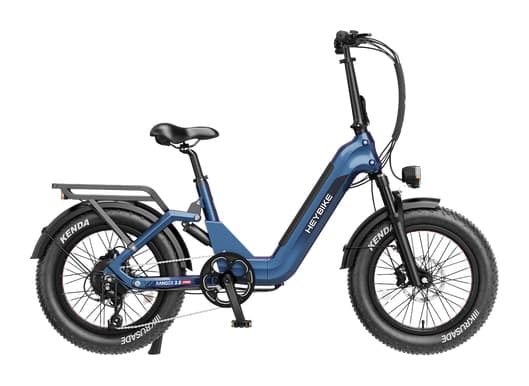 Heybike Ranger 3.0 ProLongest Range Heybike Ranger 3.0 ProLongest Range |  Kingbull RangerBest Value Kingbull RangerBest Value |  Aventon Level 3 Step ThroughBest Premium Commuter Aventon Level 3 Step ThroughBest Premium Commuter |  TST FlyerBest Under $1000 TST FlyerBest Under $1000 |  MoonCool POPBudget Friendly Option MoonCool POPBudget Friendly Option |
| Top Speed | 28 mph | 28 mph | 28 mph | 23 mph | 28 mph |
| Claimed Range | 90 mi | 80 mi | 70 mi | 65 mi | 60 mi |
| Battery | 720 Wh | 864 Wh | 733 Wh | 720 Wh | 653 Wh |
| Weight | 75 lbs | 88 lbs | 67 lbs | 58.9 lbs | 67 lbs |
| Price | $1,499 | $899 | $1,699 | $899 | $1,200 |
Our Picks
Maximum Range Leaders
Heybike Ranger 3.0 Pro
$1,499Current Price
- Top Speed
- 28 mph
- Claimed Range
- 90 mi
- Motor
- 750 W
- Battery
- 720 Wh
- Torque
- 80 Nm
- Weight
- 75 lbs
Standouts
- 90-mile claimed range leads all 2026 models
- 720 Wh battery provides all-day riding capacity
- Mid-tier $1,399 pricing for maximum range performance
Trade-offs
- 75-pound weight challenges lifting and transport
- All-terrain build trades some efficiency for versatility
The Heybike Ranger 3.0 Pro leads the field with 90 mi of claimed range from its 720 Wh battery, the longest distance of any model in our 2026 database. Powered by a 750W motor reaching 28 mph, this all-terrain bike handles mixed surface touring and extended commutes without range anxiety.
At $1,499, the Ranger 3.0 Pro delivers premium range at a mid-tier price point. The 75 lbs weight is manageable for a bike in this category, and the Class 1, 2, and 3 compatibility offers flexibility for different riding environments.
Real-world riders should expect 55 to 70 miles in typical conditions with moderate hills and mixed assist levels. The all-terrain category designation means fat tires and suspension absorb efficiency compared to sleeker commuter models, but the massive battery capacity more than compensates for the added rolling resistance.
This bike suits touring riders, rural commuters with 30+ mile round trips, and anyone who prioritizes never running out of charge over shaving weight or cost.
Powertrain6
- Motor Type
- Hub
- Nominal Power
- 750 W
- Peak Power
- 1400 W
- Torque
- 80 Nm
- Sensor Type
- Torque
- Throttle
- Yes
Battery & Range5
- Watt Hours
- 720 Wh
- Claimed Range
- 90 mi
- Charge Time
- 6-8 h
- Removable Battery
- Yes
- Battery Position
- In Frame
Components10
- Front Brake
- Hydraulic Disc
- Rear Brake
- Hydraulic Disc
- Gears
- 8
- Drive System
- Chain
- Gearing
- Derailleur
- Derailleur
- Shimano Altus
- Frame Material
- Aluminum
- Puncture Protection
- Yes
- UL 2849
- Yes
- UL 2271
- Yes
Ride Comfort3
- Front Suspension
- Hydraulic Coil
- Front Travel
- 65 mm
- Rear Suspension
- Air
Utility13
- Weight
- 75 lbs
- Max Load
- 440 lbs
- Rear Rack
- Yes
- Rear Rack Capacity
- 100 lbs
- Fenders
- Yes
- Kickstand
- Yes
- IP Rating
- IPX5
- Lights
- Yes
- Turn Signals
- Yes
- Display
- TFT
- Connectivity
- Bluetooth
- App Compatible
- Yes
- Warranty
- 24 mo
Classification3
- Category
- All Terrain
- E-Bike Class
- 1, 2, 3
- Top Assist Speed
- 28 mph
Wheels & Tires4
- Wheel Size
- 20"
- Tire Size
- 20x4.0
- Tire Category
- Fat
- Tire Brand
- Kenda
Frame & Geometry3
- Frame Style
- Folding
- Sizes
- One Size
- Overall Length
- 69.7"
Where to Buy


Price History
Amazon prices aren't tracked or shown in this chart. Amazon listings are link-out only.
Kingbull Ranger
$899Current Price
- Top Speed
- 28 mph
- Claimed Range
- 80 mi
- Motor
- 750 W
- Battery
- 48V 864 Wh
- Torque
- 85 Nm
- Weight
- 88 lbs
Standouts
- Largest 864 Wh battery for maximum capacity
- 80-mile range at just $799 beats category average by 50%
- 750W motor provides strong hill climbing
Trade-offs
- 88-pound weight is the heaviest in this roundup
- Budget brand with less established service network
The Kingbull Ranger achieves 80 mi of claimed range from the largest battery in our database at 864 Wh, all for just $799. That combination of second-longest range and lowest price makes this the value leader for riders who prioritize distance over brand recognition or premium components.
The 750W motor reaches 28 mph in Class 2 and 3 modes, providing strong acceleration for a bike at this price point. The 88 lbs weight is the heaviest in our picks, reflecting the massive battery and all-terrain fat tire build.
At under $800, buyers trade refined components and lighter weight for raw capacity and range. The Kingbull Ranger suits budget-conscious buyers who need genuine long distance capability for touring, delivery work, or rural commutes where the next charging opportunity might be 40+ miles away.
Expect 50 to 60 miles of real-world range under typical use, which still outpaces most bikes under $1,000.
Powertrain7
- Motor Type
- Hub Brushless
- Nominal Power
- 750 W
- Peak Power
- 1300 W
- Torque
- 85 Nm
- Sensor Type
- Cadence
- Assist Levels
- 5
- Throttle
- Yes
Battery & Range5
- Watt Hours
- 864 Wh
- Amp-Hours
- 18 Ah
- Voltage
- 48 V
- Claimed Range
- 80 mi
- Removable Battery
- Yes
Components6
- Front Brake
- Hydraulic Disc
- Rear Brake
- Hydraulic Disc
- Gears
- 7
- Gearing
- Derailleur
- Shifter
- Shimano SL TX50 7R, 7 speed
- Frame Material
- Steel
Ride Comfort3
- Front Suspension
- Hydraulic Coil
- Front Travel
- 80 mm
- Rear Suspension
- Coil
Utility11
- Weight
- 88 lbs
- Max Load
- 350 lbs
- Rear Rack
- Yes
- Rear Rack Capacity
- 150 lbs
- Fenders
- Yes
- Kickstand
- Yes
- IP Rating
- IPX6
- Lights
- Yes
- Turn Signals
- Yes
- Display
- Color LCD
- Warranty
- 24 mo
Classification3
- Category
- All Terrain
- E-Bike Class
- 2, 3
- Top Assist Speed
- 28 mph
Wheels & Tires3
- Wheel Size
- 20"
- Tire Size
- 20x4.0
- Tire Category
- Fat
Frame & Geometry4
- Frame Style
- Step Over
- Min Seat Height
- 33.5"
- Max Seat Height
- 33.5"
- Overall Length
- 68.1"
Where to Buy

Price History
Best Long Range Commuters
Aventon Level 3 Step Through
$1,699Current Price
- Top Speed
- 28 mph
- Claimed Range
- 70 mi
- Motor
- 500 W
- Battery
- 36V 733 Wh
- Torque
- 60 Nm
- Weight
- 67 lbs
Standouts
- 70-mile range in a lighter 67-pound commuter frame
- Step-through design for easy mounting in street clothes
- Established brand with strong service network
Trade-offs
- $1,699 premium pricing for commuter category
- Class 2 only limits versatility vs multi-class bikes
The Aventon Level 3 delivers 70 mi of claimed range in a refined commuter package at $1,699. Its 733 Wh battery and 500W motor balance range with the lighter 67 lbs weight that makes this bike easier to maneuver in urban environments.
The step-through frame design and Class 2 designation suit city riders who want long range without the bulk of all-terrain models. Aventon's established brand reputation means better component quality and service support than budget alternatives, justifying the premium over similar-range competitors.
Commuters with 25 to 35 mile round trips will find this bike hits the sweet spot of sufficient range, manageable weight, and city-friendly ergonomics. The 28 mph top speed aligns with bike lane regulations in most cities.
Expect 45 to 55 miles in real commuting conditions with stop-and-go traffic and moderate assist levels.
Powertrain7
- Motor Type
- Hub
- Nominal Power
- 500 W
- Peak Power
- 864 W
- Torque
- 60 Nm
- Sensor Type
- Torque, Cadence
- Assist Levels
- 3
- Throttle
- Yes
Battery & Range7
- Watt Hours
- 733 Wh
- Amp-Hours
- 20 Ah
- Voltage
- 36 V
- Claimed Range
- 70 mi
- Charge Time
- 5 h
- Removable Battery
- Yes
- Battery Position
- In Frame
Components14
- Front Brake
- Hydraulic Disc
- Rear Brake
- Hydraulic Disc
- Brake Brand
- Magura
- Front Rotor
- 180 mm
- Rear Rotor
- 180 mm
- Gears
- 8
- Drive System
- Chain
- Gearing
- Derailleur
- Derailleur
- Shimano Altus RD M310
- Shifter
- Shimano 8 Speed Trigger SL M315 8R
- Cassette
- 12 32T / 8 Speed Shimano CS HG200 8
- Frame Material
- Aluminum
- UL 2849
- Yes
- UL 2271
- Yes
Ride Comfort4
- Front Suspension
- Coil
- Front Travel
- 80 mm
- Rear Suspension
- Rigid
- Seatpost Suspension
- Yes
Utility13
- Weight
- 67 lbs
- Max Load
- 300 lbs
- Rear Rack
- Yes
- Rear Rack Capacity
- 60 lbs
- Fenders
- Yes
- IP Rating
- IPX5
- Lights
- Yes
- Display
- LCD
- Connectivity
- Bluetooth, GPS
- App Compatible
- Yes
- Motor Lock
- Yes
- Hill Start Assist
- Yes
- Warranty
- 24 mo
Classification3
- Category
- Commuter
- E-Bike Class
- 2
- Top Assist Speed
- 28 mph
Wheels & Tires4
- Wheel Size
- 27.5"
- Tire Size
- 27.5x2.2
- Tire Category
- All Terrain
- Tire Brand
- Kenda
Frame & Geometry2
- Frame Style
- Step Through
- Sizes
- Regular, L
Where to Buy

Price History
Best Value Long Range
TST Flyer
$899Current Price
- Top Speed
- 23 mph
- Claimed Range
- 65 mi
- Motor
- 1000 W
- Battery
- 48V 720 Wh
- Torque
- 70 Nm
- Weight
- 58.9 lbs
Standouts
- 65-mile range for under $900 is best value in category
- Lightest long range pick at 58.86 pounds
- 1000W motor provides strong acceleration at budget price
Trade-offs
- 23 mph top speed lags Class 3 alternatives
- Lesser-known brand with limited reviews
The TST Flyer offers 65 mi of claimed range for just $899, the lowest price for any bike exceeding 60 miles in our database. Its 720 Wh battery matches bikes costing twice as much, while the 1000W motor provides strong power despite the budget price.
At 58.9 lbs, this is the lightest long range bike in our picks, making it easier to transport and ride unpowered if the battery dies mid-trip. The 23 mph top speed is lower than Class 3 competitors, which may actually benefit riders in areas with strict e-bike speed limits.
Budget buyers seeking maximum range per dollar should consider the TST Flyer first. The commuter category build focuses on efficiency over all-terrain capability, which helps stretch range further than heavier fat tire models.
Real-world range of 40 to 50 miles still comfortably covers most daily commutes while undercutting premium brands by $800+.
Powertrain6
- Motor Type
- Hub Brushless
- Motor Brand
- SUTTO
- Nominal Power
- 1000 W
- Torque
- 70 Nm
- Assist Levels
- 5
- Throttle
- Yes
Battery & Range6
- Watt Hours
- 720 Wh
- Amp-Hours
- 15 Ah
- Voltage
- 48 V
- Claimed Range
- 65 mi
- Charge Time
- 4-5 h
- Removable Battery
- Yes
Components9
- Front Brake
- Hydraulic Disc
- Rear Brake
- Hydraulic Disc
- Front Rotor
- 180 mm
- Rear Rotor
- 180 mm
- Gears
- 7
- Drive System
- Chain
- Gearing
- Derailleur
- Shifter
- Shimano 7 Speed
- Puncture Protection
- Yes
Ride Comfort2
- Front Suspension
- Hydraulic Coil
- Front Travel
- 80 mm
Utility9
- Weight
- 58.9 lbs
- Max Load
- 400 lbs
- Rear Rack
- Yes
- Fenders
- Yes
- Kickstand
- Yes
- Lights
- Yes
- Display
- LCD
- App Compatible
- Yes
- Warranty
- 24 mo
Classification2
- Category
- Commuter
- Top Assist Speed
- 23 mph
Wheels & Tires4
- Wheel Size
- 27.5"
- Tire Size
- 27.5x2.25
- Tire Category
- All Terrain
- Tire Brand
- Chaoyang
Frame & Geometry4
- Min Seat Height
- 30"
- Max Seat Height
- 39"
- Standover Height
- 30"
- Overall Length
- 72.4"
No retailer is tracked for this model yet. See the full listing.
MoonCool POP
$1,200Current Price
- Top Speed
- 28 mph
- Claimed Range
- 60 mi
- Motor
- 750 W
- Battery
- 48V 653 Wh
- Torque
- —
- Weight
- 67 lbs
Standouts
- 60-mile range at mid-tier $1,199 pricing
- Manageable 67-pound weight for urban use
- Commuter design optimizes efficiency over versatility
Trade-offs
- Lesser-known brand with limited service network
- No e-bike class specification provided by manufacturer
The MoonCool POP delivers 60 mi of claimed range at $1,199, splitting the difference between extreme budget and premium pricing. Its 653 Wh battery and 750W motor provide solid mid-range performance for commuters who need 50+ miles of real-world range.
The commuter category design prioritizes efficiency and weight savings over all-terrain capability. At 67 lbs, the MoonCool POP matches the Aventon Level 3 for manageable urban handling.
This bike suits riders who want 40 to 50 miles of real range without spending $1,500+, though the lesser-known brand means less established service compared to Rad Power or Aventon. The 28 mph top speed supports bike lane and mixed-use path riding.
Buyers prioritizing value over brand recognition will find the MoonCool POP offers commuter-focused range at a price point below the established competition.
Powertrain5
- Nominal Power
- 750 W
- Peak Power
- 1200 W
- Sensor Type
- Torque, Cadence
- Assist Levels
- 5
- Throttle
- Yes
Battery & Range6
- Watt Hours
- 653 Wh
- Amp-Hours
- 13.6 Ah
- Voltage
- 48 V
- Claimed Range
- 60 mi
- Charge Time
- 7 h
- Removable Battery
- Yes
Components13
- Front Brake
- Hydraulic Disc
- Rear Brake
- Hydraulic Disc
- Front Rotor
- 180 mm
- Rear Rotor
- 180 mm
- Gears
- 7
- Drive System
- Chain
- Gearing
- Derailleur
- Derailleur
- Shimano 7 Speed
- Shifter
- L TWOO 7 Speed
- Cassette
- 11T~28T, 7 Speed
- Frame Material
- Aluminum
- UL 2849
- Yes
- UL 2271
- Yes
Ride Comfort3
- Front Suspension
- Hydraulic Coil
- Front Travel
- 60 mm
- Rear Suspension
- Coil
Utility9
- Weight
- 67 lbs
- Max Load
- 330 lbs
- Rear Rack
- Yes
- Fenders
- Yes
- IP Rating
- IPX5
- Lights
- Yes
- Turn Signals
- Yes
- Display
- Color LCD
- Warranty
- 12 mo
Classification2
- Category
- Cruiser
- Top Assist Speed
- 28 mph
Wheels & Tires3
- Wheel Size
- 20"
- Tire Size
- 20x3.0
- Tire Category
- Fat
Frame & Geometry5
- Frame Style
- Folding
- Min Seat Height
- 29.5"
- Max Seat Height
- 39.4"
- Standover Height
- 16.9"
- Overall Length
- 64.2"
Where to Buy

Price History
As an Amazon Associate, we earn from qualifying purchases.
Frequently Asked Questions
What is considered long range for an electric bike?
How do I maximize my electric bike's range?
How long does it take to charge a long range e-bike battery?
Are long range e-bikes heavier than standard models?
Can I replace the battery on a long range e-bike?
Looking to buy an electric ride?
We track 378 vehicles and check their prices every day. Start wherever suits you.
Type
Budget