Table of Contents
Finding The Right Electric Bike
The best electric bikes balance power, range, and price for your specific needs. In 2026 you can find capable models starting around $1,200, with premium options topping out near $2,500. The right choice depends on where you ride (city streets, gravel paths, or mountain trails), how far you need to go, and whether you carry cargo or passengers.
We compared manufacturer specs across all terrain, mountain, and cargo e-bikes to find standouts in each category. The picks below are grouped by budget and use case, so you can jump straight to the tier that fits you.
What To Consider Before You Buy
Motor power (measured in watts) and top speed determine how quickly you accelerate and whether you can tackle steep hills. Most e-bikes fall between 500W and 750W, with speeds capped at 28 mph for street-legal Class 3 bikes.
Battery capacity (measured in watt-hours, or Wh) and claimed range tell you how far you can ride on a charge. Real-world range varies with terrain and rider weight, but a 700+ Wh battery typically delivers 50 to 65 miles in mixed conditions.
Weight matters for maneuvering and storage. Most e-bikes weigh between 65 and 85 pounds. If you need to lift your bike onto a rack or up stairs, lighter models (under 70 lbs) make a difference.
E-bike class determines where you can legally ride. Class 1 (pedal-assist to 20 mph) and Class 2 (throttle to 20 mph) are allowed on most bike paths. Class 3 (pedal-assist to 28 mph) is usually street-only. All specs below come from manufacturers.
Quick Overview
We may earn a commission when you buy through links on this page, at no extra cost to you. Learn more
| Category | Best Budget E-Bikes (Under $1,500) | Best for Off-Road and Adventure | Best for Specialized Needs | |||
|---|---|---|---|---|---|---|
| Pick | 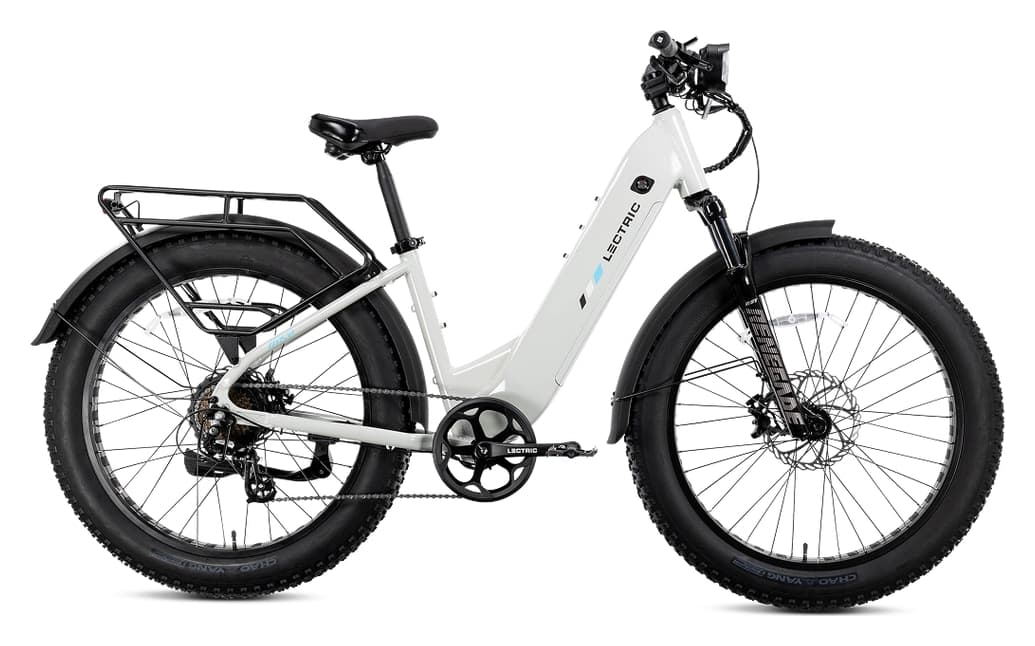 Lectric XPeak2 Step-ThruBest Value All-Arounder Lectric XPeak2 Step-ThruBest Value All-Arounder |  Kingbull Rover 2.0Best Budget Mountain Bike Kingbull Rover 2.0Best Budget Mountain Bike |  Aventon Aventure 3 Step ThroughBest Premium All-Terrain Aventon Aventure 3 Step ThroughBest Premium All-Terrain |  Heybike ALPHA Step-ThroughBest for Long Rides Heybike ALPHA Step-ThroughBest for Long Rides |  Rad Power Bikes RadWagon 5Best for Cargo Rad Power Bikes RadWagon 5Best for Cargo |  Rad Power Bikes Radster Trail RegularBest Trail Rider Rad Power Bikes Radster Trail RegularBest Trail Rider |
| Top Speed | 28 mph | 28 mph | 28 mph | 28 mph | 28 mph | 28 mph |
| Claimed Range | 60 mi | 60 mi | 65 mi | 60 mi | 60 mi | 65 mi |
| Battery | 720 Wh | 720 Wh | 733 Wh | 680 Wh | 720 Wh | 720 Wh |
| Weight | 64.5 lbs | 80 lbs | 77 lbs | 71.6 lbs | 86 lbs | 77.5 lbs |
| Price | $1,499 | $1,299 | $1,999 | $1,299Sale | $2,399 | $1,999 |
Our Picks
Best Budget E-Bikes (Under $1,500)
Lectric XPeak2 Step-Thru
$1,499Current Price
- Top Speed
- 28 mph
- Claimed Range
- 60 mi
- Motor
- 750 W
- Battery
- 48V 720 Wh
- Torque
- 85 Nm
- Weight
- 64.5 lbs
Standouts
- 750W motor and 720 Wh battery for under $1,400
- 60-mile claimed range matches bikes costing $600 more
- Class 1, 2, and 3 support for any riding environment
Trade-offs
- 64.5 lbs is still heavy for lifting onto racks
- All-terrain tires sacrifice some efficiency on pure pavement
The XPeak2 offers the best spec per dollar ratio in 2026: a 750W motor, a 720 Wh battery, and 60 miles of claimed range for under $1,400, matching the battery capacity of vehicles that cost $600 more. For a first e-bike, that combination removes the usual worry of outgrowing a cheaper model within a season.
Class 1, 2, and 3 support means you can keep it path legal at 20 mph or unlock a 28 mph throttle for street commutes, so one vehicle covers both. The all terrain build handles gravel and hardpack rather than just pavement, and the step through frame makes mounting easy for shorter riders or when you are loaded with gear. The tradeoff is efficiency: those wide tires add rolling resistance, so you feel it on long stretches of smooth road.
At 64.5 lbs it is lighter than most fat-tire models, though still a two-person lift onto a car rack, so factor in storage if you live up a flight of stairs. If you are not yet sure how you will ride, this is the safest value pick in the guide, the one that does a little of everything without a glaring weakness.
Powertrain7
- Motor Type
- Hub
- Nominal Power
- 750 W
- Peak Power
- 1310 W
- Torque
- 85 Nm
- Sensor Type
- Torque
- Assist Levels
- 5
- Throttle
- Yes
Battery & Range7
- Watt Hours
- 720 Wh
- Amp-Hours
- 15 Ah
- Voltage
- 48 V
- Claimed Range
- 60 mi
- Charge Time
- 6 h
- Removable Battery
- Yes
- Battery Position
- Downtube Mounted
Components9
- Front Brake
- Hydraulic Disc
- Rear Brake
- Hydraulic Disc
- Front Rotor
- 203 mm
- Gears
- 8
- Drive System
- Chain
- Frame Material
- Aluminum
- Puncture Protection
- Yes
- UL 2849
- Yes
- UL 2271
- Yes
Ride Comfort4
- Front Suspension
- Coil
- Front Travel
- 80 mm
- Rear Suspension
- Rigid
- Seatpost Suspension
- Yes
Utility10
- Weight
- 64.5 lbs
- Max Load
- 330 lbs
- Rear Rack
- Yes
- Rear Rack Capacity
- 60 lbs
- Fenders
- Yes
- Kickstand
- Yes
- IP Rating
- IP65
- Lights
- Yes
- Display
- Color LCD
- Connectivity
- None
Classification3
- Category
- All Terrain
- E-Bike Class
- 1, 2, 3
- Top Assist Speed
- 28 mph
Wheels & Tires3
- Wheel Size
- 26"
- Tire Size
- 26x4.0
- Tire Category
- Fat
Frame & Geometry3
- Frame Style
- Step Through
- Sizes
- One Size
- Overall Length
- 75"
Where to Buy

Price History
Kingbull Rover 2.0
$1,299Current Price
- Top Speed
- 28 mph
- Claimed Range
- 60 mi
- Motor
- 750 W
- Battery
- 48V 720 Wh
- Torque
- 80 Nm
- Weight
- 80 lbs
Standouts
- Only $1,199 with 750W motor and 720 Wh battery
- Throttle mode helps on steep, technical climbs
- Mountain-specific geometry for rough terrain
Trade-offs
- 80 lbs makes it harder to maneuver on tight trails
- Less versatile if you also need a commuter bike
If you care more about off road trails than commuting, the Rover 2.0 undercuts $1,200 while carrying the same 750W motor and 720 Wh battery as the pricier XPeak2. For a dedicated trail build at this price, that is a lot of hardware for the money.
Throttle assist helps you power up steep, technical climbs without pedaling, and the mountain oriented geometry is tuned for rough terrain instead of city streets. That focus is also its limit: the riding position and tires are built for dirt, so it feels less at home on a daily paved commute.
The other tradeoff is weight. At 80 lbs it is heavy to muscle around tight singletrack or lift onto a rack, and it is not the one to buy if you also need a do everything vehicle. But dollar for dollar, few electric vehicles give you this much trail capability at this price.
Powertrain8
- Motor Type
- Hub Brushless
- Motor Brand
- Bafang
- Nominal Power
- 750 W
- Peak Power
- 1300 W
- Torque
- 80 Nm
- Sensor Type
- Torque
- Assist Levels
- 5
- Throttle
- Yes
Battery & Range6
- Watt Hours
- 720 Wh
- Amp-Hours
- 15 Ah
- Voltage
- 48 V
- Claimed Range
- 60 mi
- Removable Battery
- Yes
- Battery Position
- In Frame
Components15
- Front Brake
- Hydraulic Disc
- Rear Brake
- Hydraulic Disc
- Brake Brand
- Zoom
- Front Rotor
- 180 mm
- Rear Rotor
- 180 mm
- Gears
- 7
- Drive System
- Chain
- Gearing
- Derailleur
- Derailleur
- Shimano RD M310
- Shifter
- Shimano SL M315 7R
- Cassette
- Shimano MF TZ500, 7 Speed, 14 28T
- Frame Material
- Aluminum
- Puncture Protection
- Yes
- UL 2849
- Yes
- UL 2271
- Yes
Ride Comfort4
- Front Suspension
- Coil
- Front Travel
- 100 mm
- Rear Suspension
- Hydraulic Coil
- Rear Travel
- 45 mm
Utility7
- Weight
- 80 lbs
- Max Load
- 400 lbs
- Kickstand
- Yes
- IP Rating
- IPX6
- Lights
- Yes
- Display
- Color LCD
- Warranty
- 24 mo
Classification3
- Category
- Mountain
- E-Bike Class
- 2, 3
- Top Assist Speed
- 28 mph
Wheels & Tires4
- Wheel Size
- 26"
- Tire Size
- 26x4.0
- Tire Category
- Fat
- Tire Brand
- CST
Frame & Geometry5
- Frame Style
- Step Over
- Min Seat Height
- 30.7"
- Max Seat Height
- 39.4"
- Standover Height
- 33"
- Overall Length
- 75.5"
Where to Buy

Price History
Best for Off-Road and Adventure
Aventon Aventure 3 Step Through
$1,999Current Price
- Top Speed
- 28 mph
- Claimed Range
- 65 mi
- Motor
- 750 W
- Battery
- 36V 733 Wh
- Torque
- 80 Nm
- Weight
- 77 lbs
Standouts
- 65-mile claimed range from a 733 Wh battery
- Step-through frame with robust all-terrain capability
- 750W motor handles mixed surfaces and climbs
Trade-offs
- Price not listed, likely above $1,800
- Class 2 only, no Class 3 speed option
The Aventure 3 leads this comparison on range, with 65 claimed miles from a 733 Wh battery paired to a 750W motor, so it is the pick when your rides regularly stretch past 40 miles or include long climbs that drain smaller packs faster.
Aventon refines the step through frame for easier mounting without giving up stability, and the 2026 model reflects a more finished ride than the budget options here, from the paint to the parts spec. It runs as a Class 2 vehicle, so you get throttle assist but top out at 20 mph rather than 28, which matters if your commute has fast, open roads where the extra speed helps.
Expect it to sit above $1,800, which is the cost of that extra range and refinement, so it is harder to justify if most of your rides are short. But for longer all terrain adventures where range anxiety is the enemy, it is the standout.
Powertrain8
- Motor Type
- Hub
- Motor Brand
- Aventon
- Nominal Power
- 750 W
- Peak Power
- 1440 W
- Torque
- 80 Nm
- Sensor Type
- Torque, Cadence
- Assist Levels
- 3
- Throttle
- Yes
Battery & Range7
- Watt Hours
- 733 Wh
- Amp-Hours
- 20 Ah
- Voltage
- 36 V
- Claimed Range
- 65 mi
- Charge Time
- 5 h
- Removable Battery
- Yes
- Battery Position
- In Frame
Components15
- Front Brake
- Hydraulic Disc
- Rear Brake
- Hydraulic Disc
- Brake Brand
- Tektro
- Front Rotor
- 180 mm
- Rear Rotor
- 180 mm
- Gears
- 8
- Drive System
- Chain
- Gearing
- Derailleur
- Derailleur
- Shimano Altus 8 Speed
- Shifter
- Shimano 8 Speed Trigger
- Cassette
- 12 32T / 8 Speed Shimano CS HG200 8
- Frame Material
- Aluminum
- Puncture Protection
- Yes
- UL 2849
- Yes
- UL 2271
- Yes
Ride Comfort4
- Front Suspension
- Coil
- Front Travel
- 80 mm
- Rear Suspension
- Rigid
- Seatpost Suspension
- Yes
Utility12
- Weight
- 77 lbs
- Max Load
- 400 lbs
- Rear Rack
- Yes
- Fenders
- Yes
- Kickstand
- Yes
- IP Rating
- IPX5
- Lights
- Yes
- Display
- LCD
- Connectivity
- Bluetooth, GPS
- App Compatible
- Yes
- Motor Lock
- Yes
- Warranty
- 24 mo
Classification3
- Category
- All Terrain
- E-Bike Class
- 2
- Top Assist Speed
- 28 mph
Wheels & Tires4
- Wheel Size
- 26"
- Tire Size
- 26x4.0
- Tire Category
- Fat
- Tire Brand
- Innova
Frame & Geometry2
- Frame Style
- Step Through
- Sizes
- Regular, L
Where to Buy

Price History
Heybike ALPHA Step-Through
$1,299$1,799Sale
- Top Speed
- 28 mph
- Claimed Range
- 60 mi
- Motor
- 500 W
- Battery
- 680 Wh
- Torque
- 105 Nm
- Weight
- 71.6 lbs
Standouts
- 680 Wh battery delivers consistent power
- 71.6 lbs is lighter than most all-terrain bikes
- $1,799 price balances range and affordability
Trade-offs
- 500W motor adequate but not as strong on steep climbs
- E-bike class not specified, may limit riding locations
At $1,799 the ALPHA delivers a genuine 60 miles of range from its 680 Wh battery, strong distance for the money and enough for a full weekend of errands between charges.
Its 500W motor is the smallest here, so it trades some punch on the steepest climbs for efficiency that stretches each charge further; if you live somewhere flat, you may never miss the extra watts. The upside shows up in weight: at 71.6 lbs it is lighter than most all terrain rivals, which makes it easier to handle and store.
The e-bike class is not specified, so confirm the legal riding modes for your area before you buy. If your priority is covering long, mostly flat miles on a mid tier budget, it fits well, but hill country riders should look at a 750W option instead.
Powertrain7
- Motor Type
- Mid Drive
- Motor Brand
- Mivice
- Nominal Power
- 500 W
- Peak Power
- 1000 W
- Torque
- 105 Nm
- Sensor Type
- Torque, Cadence
- Throttle
- Yes
Battery & Range3
- Watt Hours
- 680 Wh
- Claimed Range
- 60 mi
- Removable Battery
- Yes
Components12
- Front Brake
- Hydraulic Disc
- Rear Brake
- Hydraulic Disc
- Brake Brand
- Shimano
- Gears
- 8
- Drive System
- Chain
- Gearing
- Derailleur
- Derailleur
- Shimano Altus 8 speed
- Shifter
- Shimano Altus 8 Speed Shifter
- Frame Material
- Aluminum
- Puncture Protection
- Yes
- UL 2849
- Yes
- UL 2271
- Yes
Ride Comfort1
- Front Suspension
- Hydraulic Coil
Utility10
- Weight
- 71.6 lbs
- Max Load
- 400 lbs
- Rear Rack
- Yes
- Fenders
- Yes
- Kickstand
- Yes
- Lights
- Yes
- Display
- LCD
- Connectivity
- Bluetooth
- App Compatible
- Yes
- Warranty
- 24 mo
Classification2
- Category
- All Terrain
- Top Assist Speed
- 28 mph
Wheels & Tires3
- Wheel Size
- 26"
- Tire Size
- 26x4.0
- Tire Category
- Fat
Frame & Geometry4
- Frame Style
- Step Through
- Min Seat Height
- 33.1"
- Max Seat Height
- 38.2"
- Overall Length
- 76.8"
Where to Buy

Price History
Best for Specialized Needs
Rad Power Bikes RadWagon 5
$2,399Current Price
- Top Speed
- 28 mph
- Claimed Range
- 60 mi
- Motor
- 750 W
- Battery
- 48V 720 Wh
- Torque
- 90 Nm
- Weight
- 86 lbs
Standouts
- Dedicated cargo design with reinforced frame
- 750W motor handles heavy loads up hills
- Class 1, 2, and 3 modes for flexibility
Trade-offs
- $2,399 is expensive if you don't regularly haul cargo
- 86 lbs makes storage challenging without a load
The RadWagon 5 is the only purpose-built hauler in this guide, with a reinforced frame and an extended rear deck sized for kids, groceries, or gear. If your goal is to replace car trips, that dedicated cargo design is the whole point.
Its 750W motor delivers strong low end torque for pulling heavy loads away from a stop, and Class 1, 2, and 3 modes give you throttle assist exactly when a loaded vehicle needs it most. The extended rear deck is built to carry bags, kids, or gear, so you can set it up around your specific loads.
The catch is size and weight: at 86 lbs it is long and heavy before you add cargo, so storage and tight space maneuvering take planning. At $2,399 it is hard to justify unless you will haul regularly, but for families or anyone moving real loads, it is the clear choice.
Powertrain6
- Motor Type
- Geared Hub
- Nominal Power
- 750 W
- Torque
- 90 Nm
- Sensor Type
- Torque
- Assist Levels
- 5
- Throttle
- Yes
Battery & Range7
- Watt Hours
- 720 Wh
- Amp-Hours
- 15 Ah
- Voltage
- 48 V
- Claimed Range
- 60 mi
- Charge Time
- 7.5 h
- Removable Battery
- Yes
- Battery Position
- Other
Components15
- Front Brake
- Hydraulic Disc
- Rear Brake
- Hydraulic Disc
- Brake Brand
- Tektro
- Front Rotor
- 180 mm
- Rear Rotor
- 180 mm
- Gears
- 7
- Drive System
- Chain
- Gearing
- Derailleur
- Derailleur
- Shimano
- Shifter
- Shimano 7 Speed thumb shifter
- Cassette
- 7 Speed, 11 34T
- Frame Material
- Aluminum
- Puncture Protection
- Yes
- UL 2849
- Yes
- UL 2271
- Yes
Ride Comfort3
- Front Suspension
- Hydraulic Coil
- Front Travel
- 45 mm
- Rear Suspension
- Rigid
Utility11
- Weight
- 86 lbs
- Max Load
- 375 lbs
- Rear Rack
- Yes
- Rear Rack Capacity
- 120 lbs
- Fenders
- Yes
- Kickstand
- Yes
- IP Rating
- IPX6
- Lights
- Yes
- Turn Signals
- Yes
- Display
- Color LCD
- Motor Lock
- Yes
Classification3
- Category
- Cargo
- E-Bike Class
- 1, 2, 3
- Top Assist Speed
- 28 mph
Wheels & Tires4
- Wheel Size
- 20"
- Tire Size
- 20x3.3
- Tire Category
- All Terrain
- Tire Brand
- Kenda
Frame & Geometry6
- Frame Style
- Step Through
- Sizes
- One Size
- Min Seat Height
- 30.5"
- Max Seat Height
- 41.8"
- Standover Height
- 21"
- Overall Length
- 76"
Where to Buy

Price History
Rad Power Bikes Radster Trail Regular
$1,999Current Price
- Top Speed
- 28 mph
- Claimed Range
- 65 mi
- Motor
- 750 W
- Battery
- 48V 720 Wh
- Torque
- 100 Nm
- Weight
- 77.5 lbs
Standouts
- 65-mile claimed range for extended trail rides
- Class 1, 2, and 3 modes for trail and street riding
- 750W motor and mountain geometry for technical terrain
Trade-offs
- $1,999 is a premium price for a mountain e-bike
- 77.5 lbs is still heavy compared to analog mountain bikes
For riders focused on the trail, the Radster Trail pairs a 750W motor with mountain bike geometry and the longest range in the mountain category at 65 claimed miles, so you can string together a full day of riding without a spare battery.
Class 1, 2, and 3 modes let you ride to the trailhead at 28 mph, then drop into Class 1 for legal, controlled singletrack. At 77.5 lbs it is heavy next to an analog mountain bike but still manageable to lift over obstacles or onto a truck bed rack.
The $1,999 price is a premium, but you are paying for range and suspension that hold up on technical terrain, plus the multi-class versatility the budget trail bikes lack. If your weekends revolve around trails rather than errands, this is the one to get.
Powertrain6
- Motor Type
- Hub
- Nominal Power
- 750 W
- Torque
- 100 Nm
- Sensor Type
- Torque
- Assist Levels
- 5
- Throttle
- Yes
Battery & Range6
- Watt Hours
- 720 Wh
- Amp-Hours
- 15 Ah
- Voltage
- 48 V
- Claimed Range
- 65 mi
- Removable Battery
- Yes
- Battery Position
- Downtube Mounted
Components15
- Front Brake
- Hydraulic Disc
- Rear Brake
- Hydraulic Disc
- Brake Brand
- Tektro
- Front Rotor
- 180 mm
- Rear Rotor
- 180 mm
- Gears
- 8
- Drive System
- Chain
- Gearing
- Derailleur
- Derailleur
- Shimano 8 Speed
- Shifter
- Shimano 8 Speed thumb shifter
- Cassette
- 8 Speed freewheel, 11 34T
- Frame Material
- Aluminum
- Puncture Protection
- Yes
- UL 2849
- Yes
- UL 2271
- Yes
Ride Comfort3
- Front Suspension
- Hydraulic Coil
- Front Travel
- 80 mm
- Rear Suspension
- Rigid
Utility11
- Weight
- 77.5 lbs
- Max Load
- 290 lbs
- Rear Rack
- Yes
- Rear Rack Capacity
- 55 lbs
- Fenders
- Yes
- Kickstand
- Yes
- Lights
- Yes
- Turn Signals
- Yes
- Display
- Color LCD
- Connectivity
- Bluetooth
- Motor Lock
- Yes
Classification3
- Category
- Mountain
- E-Bike Class
- 1, 2, 3
- Top Assist Speed
- 28 mph
Wheels & Tires4
- Wheel Size
- 27.5"
- Tire Size
- 27.5x3.0
- Tire Category
- Fat
- Tire Brand
- Kenda
Frame & Geometry6
- Frame Style
- Step Through
- Sizes
- M, L
- Min Seat Height
- 30.5"
- Max Seat Height
- 37.5"
- Standover Height
- 21"
- Overall Length
- 74"
Where to Buy
Price History
We may earn a commission.
Frequently Asked Questions
What is the best electric bike for the money in 2026?
How much should I spend on a good electric bike?
What is the average range of an electric bike?
Are 500W or 750W e-bikes better?
Can electric bikes be used on bike paths?
Looking to buy an electric ride?
We track 378 vehicles and check their prices every day. Start wherever suits you.
Type
Budget