A helmet is the one accessory with no argument on the other side. Everything else on this site is a trade-off between money, weight and convenience. This one is not.
The complication for PEV riders is that most bicycle helmets were designed around a rider doing 12 to 15 mph under their own power. A Class 3 e-bike does 28. An e-scooter or one-wheel puts you closer to the ground but throws you differently. The certification on the sticker was written for the slower case, and that gap is what the picks below are chosen around.
What the certifications actually mean
CPSC is the floor, not a ranking. Every helmet legally sold as a bicycle helmet in the US meets CPSC 1203. It is a pass or fail standard, so a CPSC sticker tells you the helmet cleared the bar and nothing about how far it cleared it. Two helmets with identical stickers can perform very differently. Treat CPSC as the price of entry and then look at everything else.
ASTM F1492 is the skate standard, and it matters more than people think. CPSC tests a single hard impact, on the assumption that you crash once and replace the helmet. ASTM F1492 tests multiple impacts, because skaters fall repeatedly in a session. For e-scooter, one-wheel and e-skate riders, who tend to go down at lower speed but more often, a dual-certified helmet is the more honest match to how you will actually crash. The Triple Eight here carries both.
NTA 8776 exists specifically for speed pedelecs, and almost nothing sold in the US has it. It is a Dutch standard built around 28 mph e-bikes, with more coverage at the temples and rear of the head than a bicycle standard demands. If you ride a Class 3 and you see it on a helmet, that is a genuine signal. Its absence is not a red flag, because US distribution is thin, but it is worth knowing the standard exists rather than assuming CPSC covers 28 mph riding. It was not written for it.
What to look for
MIPS, or an equivalent rotational system, is the single upgrade worth paying for. A straight-on impact is the rare crash. Most real falls land you at an angle, and the brain injury comes from the head twisting rather than stopping. MIPS is a low-friction liner that lets the shell rotate a few millimetres against your head and shed some of that rotation. Competing systems like WaveCel and SPIN do the same job by different means. Any of them beats none, and the cost difference is now small enough that skipping it is hard to justify.
Coverage matters more as speed goes up. A vented road helmet stops well above the ears and leaves the back of your skull comparatively exposed. Skate-style and urban shells drop lower at the rear and sides. At 15 mph that difference is academic. At 28 mph, or on a one-wheel where a rearward fall is the classic crash, it stops being academic. Match the shape to how your vehicle actually throws you, not to what looks fastest.
Ventilation is a real trade, not a luxury. More vents means a cooler head and a lighter helmet, and less shell material. On an e-bike you are pedalling less and moving faster, so airflow is higher and your own heat output is lower than on an acoustic bike. That tilts the balance toward more coverage than a road cyclist would choose. If your commute is short, prioritise coverage. If you are climbing in summer heat, you will want the vents.
Fit is what decides whether any of the above happens. A helmet that moves on your head redistributes an impact somewhere useless, and one that pinches gets left at home. It should sit level, two fingers above the eyebrows, with the straps forming a Y just under the ears and no more than a finger under the chin strap. Shake your head hard before you buy. If the helmet moves independently of your scalp, the size or the shape is wrong, and no amount of pad-swapping fixes a fundamentally wrong shell shape.
Check for a lock port and light mount if you park in public. These sound like small conveniences and turn out to change behaviour. A helmet you can lock to the bike is a helmet that is with you when you need it, rather than left at home because carrying it around a shop is annoying. An integrated rear light mount means the helmet carries a light at the highest point on you, which is the most visible place it can be.
Replace it after any real impact, and about every five years regardless. Foam crushes once. A helmet that has taken a solid hit has spent its protection even when the shell looks fine, and the multi-impact ASTM helmets are the only partial exception. Away from crashes, the liner degrades with sweat, UV and heat. Several makers run crash-replacement programmes that discount a new helmet after a documented crash, which is worth checking before you buy rather than after.
How we picked
Certifications, MIPS availability and features are each maker's published specifications. We have not run impact tests, and nobody should trust a website that claims it has without a lab behind it. Where a helmet's rating comes from an independent testing programme rather than the maker, we say so.
Our picks
| Product | Certification | Rotational | Integrated light | Style |
|---|---|---|---|---|
| SpecializedModeTop pick | CPSC + NTA 8776 | MIPS (ANGi ready) | No, Stix compatible | Urban |
| XnitoHelmet | CPSC + NTA 8776 | Yes | Front and rear LED | Urban / moto |
| ABUSPedelec 2.0 MIPS | CPSC + NTA 8776 | MIPS | Rear LED | Urban |
| BernHudson MIPS | CPSC + NTA 8776 | MIPS | Rear light mount | Urban / skate |
| GiroCamden MIPS | CPSC | MIPS | No | Urban |
| ThousandHeritage 2.0 | CPSC | Optional | No | Urban |
| Triple EightCertified SweatsaverBudget pick | CPSC + ASTM F1492 | No | No | Skate |
| SmithExpress MIPS | CPSC | MIPS | No | Road |
Specialized · Helmets
Mode
Standouts
- NTA 8776 certified to 28 mph
- 5-star Virginia Tech rating
- ANGi crash-detection ready
- Two headform shapes
Trade-offs
- No integrated light
- Uses the older-style MIPS liner
The Mode is the rare helmet that satisfies both things a PEV rider should care about at once. It passes NTA 8776, the Dutch standard written specifically for 28 mph e-bike riding, and it carries a 5-star rating from Virginia Tech's independent lab. Most helmets have one or the other. Very few have both.
What you give up is integrated lighting, which the Xnito and the ABUS include, and it uses the older MIPS liner rather than the newer integrated versions. Neither changes the protection story. If you want one helmet chosen on evidence rather than looks, this is it.
Xnito · Helmets
Helmet
Standouts
- NTA 8776 certified to 28 mph
- Front and rear lights integrated
- Built specifically for PEV speeds
Trade-offs
- Heavier than a vented road helmet
Xnito builds only for e-bike and scooter riders, and it shows in the specification: every model is NTA 8776 certified to 28 mph, with front and rear LEDs designed into the shell rather than clipped on afterwards.
That matters more than it sounds. A light built into the helmet sits at the highest point on you, moves where you look, and is never the thing you left on the kitchen table. The trade is weight and ventilation against a vented road helmet, which is the right trade if you are riding at speed rather than working hard.
ABUS · Helmets
Pedelec 2.0 MIPS
Standouts
- NTA 8776 certified to 28 mph
- MIPS plus an integrated rear light
- Extended rear coverage
Trade-offs
- Fewer vents than a road helmet
The European speed-pedelec staple, and the most complete package here: NTA 8776 certification, MIPS, an integrated rear light, and noticeably deeper coverage at the back of the head than a bicycle helmet is required to give you.
ABUS has been building to this standard for years because speed pedelecs are mainstream in Europe in a way they are not yet in the US. The result is a helmet designed around 28 mph from the start rather than adapted to it. Expect fewer vents than a road helmet, which is the cost of the extra shell.
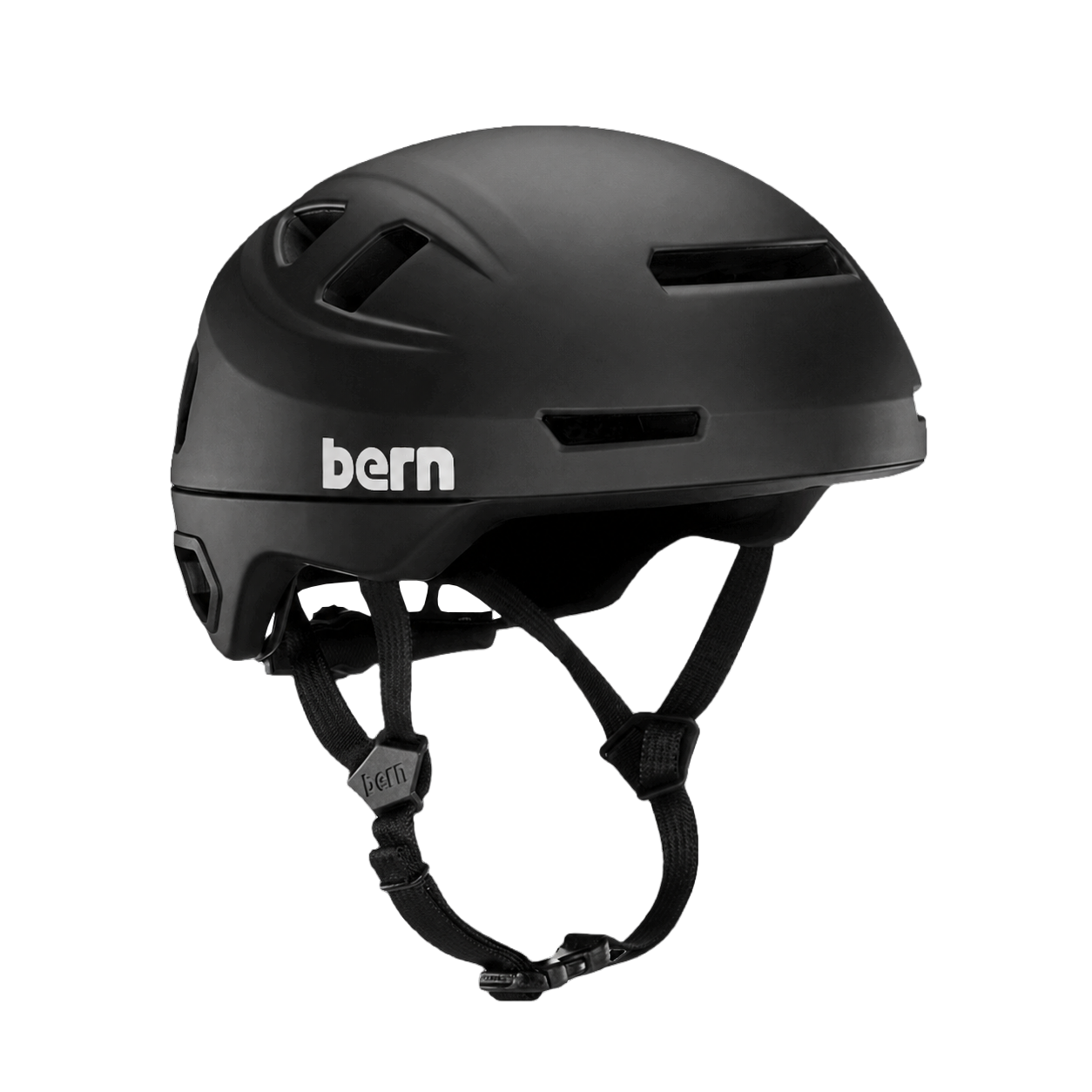
Bern · Helmets
Hudson MIPS
Standouts
- NTA 8776 in a skate shape
- Low rear coverage suits scooters and EUCs
- Rear light mount built in
Trade-offs
- Warmer than a vented commuter lid
The Hudson splits the difference between skate coverage and bike venting: deeper shell than a road helmet, MIPS inside, and an integrated mount so a rear light clips on without straps. Scooter and one-wheel riders like it for exactly that mix.
It runs warmer than the Express and heavier than minimalist lids. If your riding involves any chance of sliding falls rather than pitch-overs, the extra coverage earns the weight.
Giro · Helmets
Camden MIPS
Standouts
- MIPS at a mainstream price
- Understated commuter styling
Trade-offs
- No NTA 8776 certification
- No integrated light
The safe default for someone who wants MIPS, a durable shell and a fit system that works over a cap, without the helmet announcing itself. Giro's commuter line has been iterated for years and the Camden is the sensible middle of it.
It is the pick here with the least PEV-specific engineering: no NTA 8776, no integrated light. If your riding is mostly under 20 mph on lit streets, that gap is theoretical, and the Camden is more comfortable day to day than the heavier certified options.
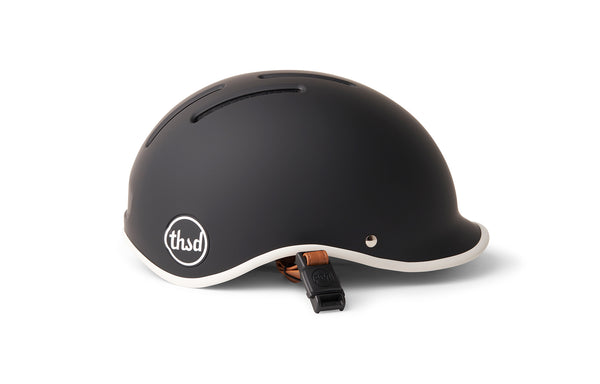
Thousand · Helmets
Heritage 2.0
Standouts
- Hidden lock port
- Crash-replacement policy
- The one people keep wearing
Trade-offs
- MIPS is an upgrade, not standard
- No NTA 8776 certification
The Heritage 2.0 is the helmet for riders who skipped helmets because of how they look. The retro shell hides real commuter thinking: a hidden channel lets a lock pass through so the helmet can stay with the bike, MIPS is available for rotational protection, and Thousand replaces it free if you crash it.
It is heavier than a road lid and less vented, which matters more at pedaling effort than at throttle speed. For daily street riding, it is the pick that actually gets worn.
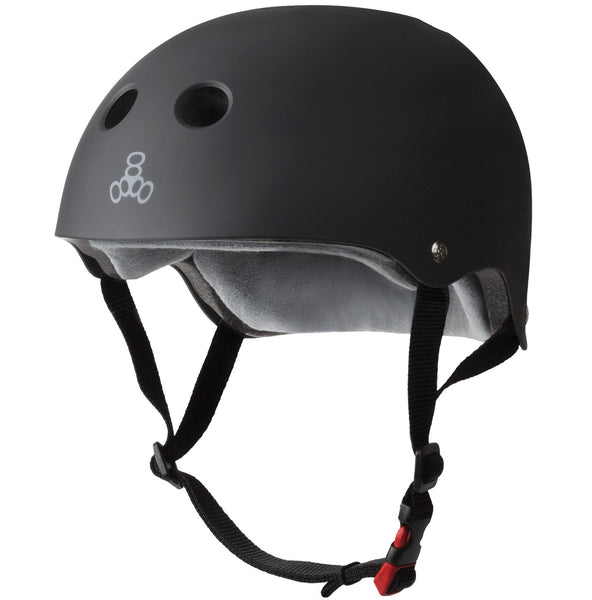
Triple Eight · Helmets
Certified Sweatsaver
Standouts
- Multi-impact ASTM certification
- Cheapest way to a real standard
- Deep rear coverage
Trade-offs
- No rotational protection system
- Very little ventilation
Dual certification is the story here: CPSC for bike impacts plus ASTM F1492 for skate-style multiple knocks, at a price that embarrasses most single-cert helmets. E-skate and EUC riders made it a default for a reason.
No MIPS at this price point and the foam-heavy build runs warm in summer. As cheap real protection for standing PEVs, nothing else in this list touches it.

Smith · Helmets
Express MIPS
Standouts
- Light and well ventilated
- MIPS at a mid price
Trade-offs
- Least rear coverage here
- No NTA 8776 certification
The Express brings road-helmet lightness and venting to a commuter price, with MIPS standard rather than as an upsell. That combination suits Class 3 riders who sit at 28 mph, where wind noise and heat build fast under heavier lids.
Coverage is road-style, higher above the ears and rear than skate shells. Riders on standing PEVs may want more wraparound; for fast e-bike commuting this is the sweet spot.
As an Amazon Associate, we earn from qualifying purchases.
Frequently asked questions
Do I legally need a helmet on an e-bike?
Is MIPS actually worth it?
Want to dig deeper?
Compare the picks in this guide side by side, or jump into the full database to filter on any spec.
More best of reads
The Best Locks for E-Bikes
E-bikes are theft magnets, and thieves bring angle grinders now. Sold Secure ratings and grinder resistance are what separate real security from theater.
The Best Lights for E-Bikes and Scooters
Integrated PEV lights are rarely bright enough to be seen by drivers at speed. A real headlight and a rear light with daytime flash are the cheapest safety upgrade there is.

Fastest Electric Scooters for 2026: Top Speed Models Compared
The fastest electric scooters in 2026 reach speeds up to 68 mph, with top performers starting around $1,400 for 50+ mph models and $2,900+ for 65-68 mph peak speed.