Table of Contents
A trailer behind an e-bike replaces more car trips than any other accessory. Kids, a full grocery shop, a load of building supplies. A motor makes towing 100 pounds genuinely easy, which is why trailers and e-bikes suit each other so well.
There is one thing that catches almost everyone, and it is not the trailer.
How we picked
Capacities, hitch types and compatibility notes are each maker's published specifications, and the axle compatibility guidance comes from the manufacturers' own e-bike documentation. We have not tow-tested any trailer.
Quick Overview
We may earn a commission when you buy through links on this page, at no extra cost to you. As an Amazon Associate, we earn from qualifying purchases. Learn more
| Pick | 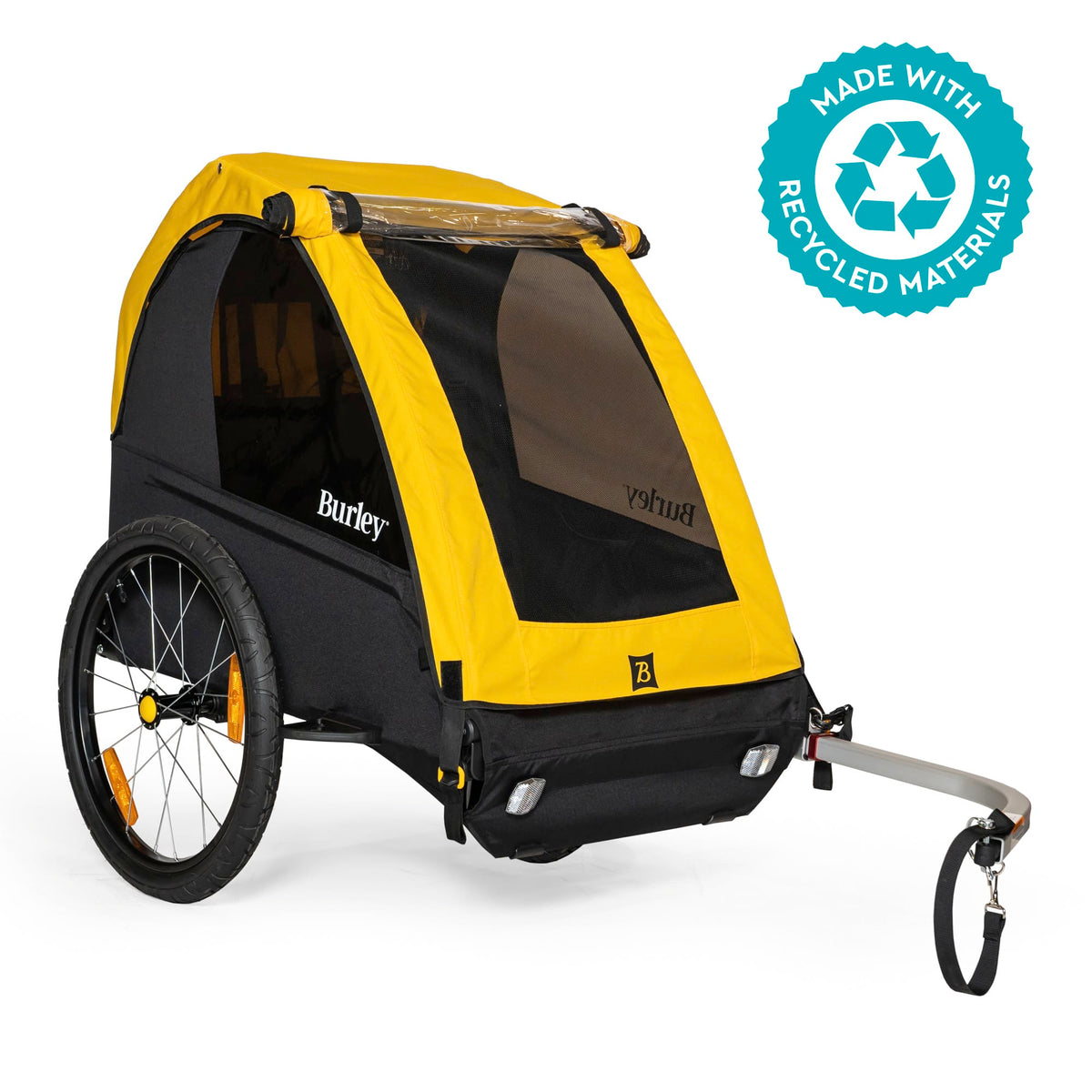 Burley BeeTop pick Burley BeeTop pick |  Burley Flatbed Burley Flatbed | 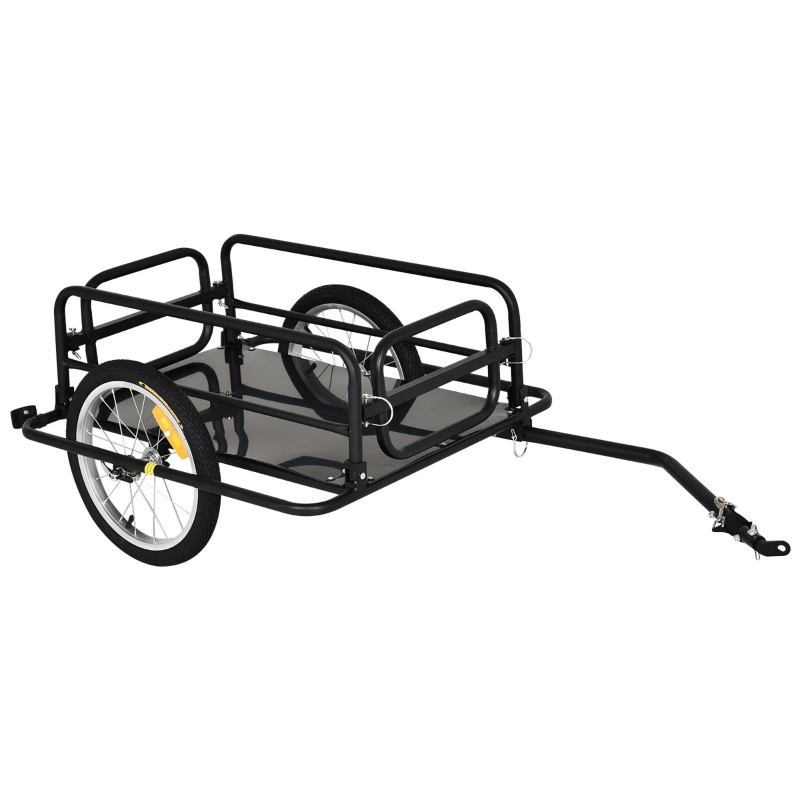 Aosom WandererBudget pick Aosom WandererBudget pick |
|---|---|---|---|
| Use | 1-2 kids | Open cargo | Enclosed cargo |
| Capacity | 100 lbs (Double) | 100 lbs | 110 lbs |
| Hitch | Axle mount, thru-axle adapter | Axle mount, thru-axle adapter | Universal axle coupler |
| Buy | Buy | Buy | Buy |
Our Picks
Burley Bee
- Use
- 1-2 kids
- Capacity
- 100 lbs (Double)
- Hitch
- Axle mount, thru-axle adapter
Standouts
- Publishes real e-bike towing guidance
- Folds to 10 in flat
Trade-offs
- Thru-axle e-bikes need the matched Burley adapter, sold separately
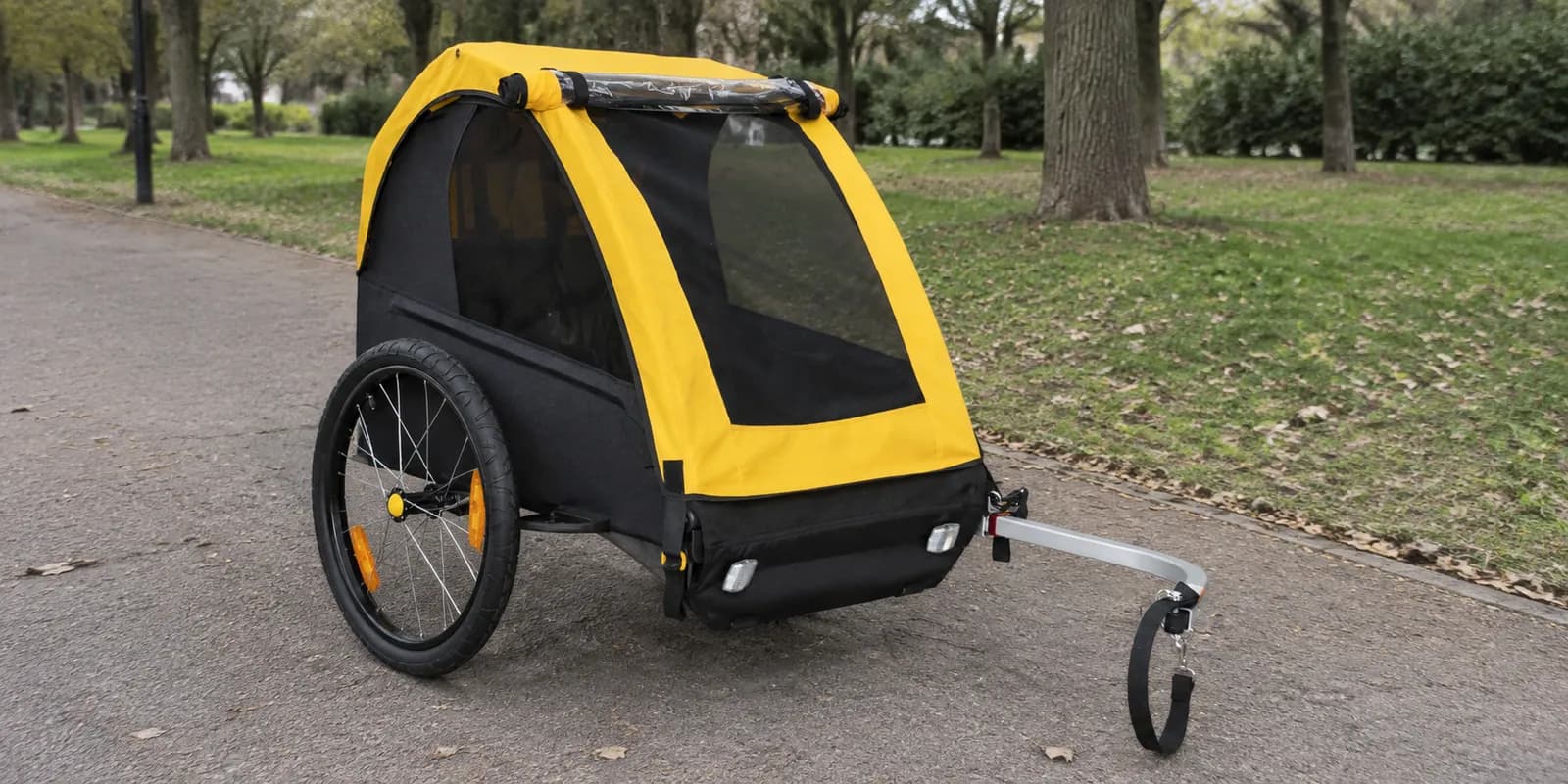
The Bee is the benchmark kids trailer for reasons that show up in the details: a flex connector that keeps the trailer upright even if the bike tips, a published e-bike compatibility guide with a 10 to 15 mph towing recommendation, and a fold to ten inches flat.
Thru-axle e-bikes need Burley's matched adapter, sold separately and specified per bike. Buying the hitch right is the whole game, and Burley documents it best.
Standouts
- Open bed takes oversized loads
- 15 lbs, folds flat
Trade-offs
- No enclosure — cargo rides exposed
The Flatbed is the Bee's cargo sibling: an open 100 lb platform for loads that fit inside nothing, on the same well-documented hitch system, at 15 lbs of trailer.
Cargo rides exposed to weather and needs strapping. For lumber-yard runs and oversized hauls behind an e-bike, its simplicity is the feature.
Standouts
- Highest stated capacity here
- Often heavily discounted
Trade-offs
- No published thru-axle or e-bike fitment guidance
- Heavier than the Burleys
The Wanderer is the budget path into cargo trailers: an enclosed 110 lb box with a universal axle coupler, routinely discounted to a fraction of the boutique trailers' price.
Aosom publishes no thru-axle or e-bike fitment guidance, so modern-axle owners are on their own for adapters, and the trailer outweighs both Burleys. For quick-release bikes on a budget, it hauls a lot for little.
As an Amazon Associate, we earn from qualifying purchases.
How to Choose
Read this before you buy: the hitch
A trailer attaches to the rear axle. Which axle you have decides whether it fits, and this is where e-bikes differ from the bicycles trailers were designed around.
Traditional quick-release axles take a standard trailer hitch directly. This is the easy case.
Thru-axles are the thick threaded axles common on newer and higher-end bikes. They need a matched adapter, usually specific to the axle's thread pitch and diameter.
Bolt-on axles, common on hub-motor e-bikes, often have a motor's torque arms and wiring already occupying the space the hitch wants. Some need a specific adapter, some need a different hitch style entirely, and a few simply do not work.
So check your axle before you check anything else. The good makers publish an e-bike compatibility guide that names axle types and part numbers. That document existing at all is a strong signal about the company.
What to look for
Keep towing speeds down, and take that seriously. Trailer makers commonly recommend towing at 10 to 15 mph, which is well below what an e-bike will happily do. A trailer at 25 mph behaves differently: it can start to sway, and the physics of a hinged load behind you at speed is not forgiving. This is the single most important habit in this category, and the e-bike's ability to go faster is exactly why it needs saying.
Capacity is about volume as much as weight. Most trailers here are rated around 100 pounds, and you will usually run out of space before you run out of rating. Think about what you actually carry: a large flat load needs an open flatbed, a grocery run wants an enclosed box, and children need a purpose-built child trailer with a harness and a roll structure. Do not use a cargo trailer for a child.
Child trailers are a separate product with real safety features. A five-point harness, a roll cage, a rain and bug cover, and a flag. Look for a maker that publishes standards compliance rather than one that merely looks similar. This is not a place to save money on a lookalike.
Wheel size affects how it rides more than you would expect. Bigger wheels roll over kerbs, potholes and rough pavement far better and track more steadily. Small wheels make a trailer more compact to store and more easily upset by a bump. If your route includes rough surfaces or kerb transitions, prioritise wheel size.
Check how it folds and where it will live. A trailer is a large object that spends most of its life not being used. If it does not fold reasonably flat, you need somewhere to keep an object the size of a wheelbarrow. This decides whether you use it or resent it.
Flags and lights are not optional at PEV speeds. A low trailer is invisible to a driver behind a taller vehicle, and it extends your length by three or four feet in a way drivers do not expect. A tall flag plus its own rear light are the minimum, and a light on the trailer rather than the bike is what matters, because the trailer is what a car will hit first.
Practise turning and reversing before you load it. A trailer cuts the corner on a turn, so you need to swing wider than feels natural, and reversing is close to impossible without unhitching. Ten minutes in an empty car park with an unloaded trailer saves you a scraped kerb and a tipped load.
Expect the bike to feel different, especially braking. You have roughly doubled the mass you are stopping, and the trailer pushes you from behind when you brake. Leave far more room than you would think, especially downhill, and be aware that regenerative braking alone will not be enough.
Frequently Asked Questions
Can any e-bike pull a trailer?
Kids trailer or child seat?
Looking to buy an electric ride?
We track 378 vehicles and check their prices every day. Start wherever suits you.
Type
Budget